A damp wall in a Singapore home can begin with something as small as a hairline crack, deteriorated window seal, failed waterproofing or concealed pipe leak.
The visible patch may appear harmless at first, but repainting it without fixing the water source often means the discolouration, bubbling paint or dampness eventually returns.
The difficult part is that water does not always appear where it first enters the building.
Moisture can travel through concrete, joints, cavities, external-wall surfaces, wet-area screed or concealed pipes before becoming visible somewhere else. A stain on an internal wall could therefore originate from an exterior crack exposed to rain, a bathroom on the other side, a leaking pipe or another adjoining building component.
Allstar Waterproofing & Services currently provides water-seepage and leakage repair alongside wet-area waterproofing, concrete repair and difficult-access exterior work in Singapore. Its published process begins with inspection and diagnosis before a repair scope is recommended.
For property owners, the first question should therefore not be:
“Which coating should I apply?”
It should be:
“Where is the water entering this wall, and what has actually failed?”
Quick Answer: What Causes Water Seepage Through Walls in Singapore?
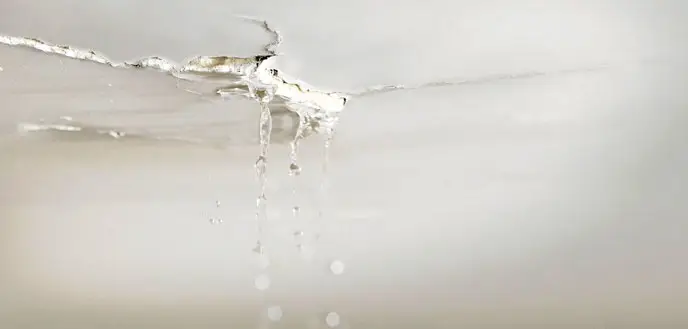
Water seepage through a wall can come from several different sources.
External cracks or façade joints can allow rainwater into the wall.
Failed waterproofing or protective coatings can reduce the wall’s resistance to water penetration.
Deteriorated window seals can allow wind-driven rain around the frame.
A concealed pipe leak can create persistent dampness even when there has been no rain.
A bathroom or wet area on the other side of the wall can cause moisture to migrate through adjoining materials.
Concrete cracks or joints can sometimes provide a direct water pathway that requires crack repair, injection or concrete repair.
The correct repair therefore depends on the source.
A waterproof coating cannot repair a leaking pipe, while treating only the inside surface may not stop rain entering through an external façade defect.
Wall Seepage Symptoms: What Could Be Causing Them?
| What You Notice | Possible Source | What May Need Investigation |
| Wall becomes damp mainly after rain | External crack, façade joint, window perimeter | External-wall inspection and sealing/waterproofing assessment |
| Damp patch beside a bathroom | Wet-area waterproofing or plumbing | Bathroom/wet-area and plumbing assessment |
| Constant dampness regardless of weather | Concealed pipe or persistent internal source | Plumbing and adjoining-area checks |
| Water appearing through a visible concrete crack | Concrete crack or joint | Crack repair, PU injection or concrete assessment |
| Peeling/bubbling paint after rainfall | Water ingress behind the wall finish | Exterior wall, window or adjoining building element |
| Surface moisture in a humid room but no link to rain or plumbing use | Condensation may be possible | Ventilation and moisture-source assessment |
These patterns are useful clues rather than final diagnoses.
More than one defect can also exist at the same time.
What Is Water Seepage Through a Wall?
Wall seepage happens when moisture finds a pathway through a building surface or adjoining component and gradually reaches the visible wall finish.
The water may enter directly through the external wall during heavy rain, but that is only one possibility.
It can also come from window joints, wet areas, pipes, roof-wall connections or concrete cracks.
The difference matters because each source requires a different response.
A pipe leak requires plumbing work.
A failed façade joint needs exterior repair.
A suitable concrete crack may require injection or crack repair.
An extensively deteriorated waterproofing system may need a broader waterproofing treatment.
Why Is Wall Seepage Common in Singapore?
Singapore buildings are regularly exposed to rain, humidity and strong solar heating.
External walls, window joints, façades and roof-wall connections repeatedly become wet and dry, while temperature changes can place additional movement on joints and sealants.
Over time, existing cracks, deteriorated seals or weaknesses in protective systems can become pathways for water.
The property type also changes the likely source.
An HDB flat may experience seepage from common-property walls or inter-floor wet areas.
A condominium may be affected by façade joints, balconies or wet areas.
Landed homes have more directly exposed walls, windows, roofs, gutters and ground-level drainage around the building.
There is therefore no single repair method that suits every damp wall in Singapore.
What Are the Main Causes of Water Seepage on Walls?
Several building defects can produce similar-looking dampness.
Can Cracks Cause Water to Seep Through a Wall?
Yes.
Cracks in concrete or adjoining building elements can provide a route for water.
During rain, an external crack can allow moisture behind the surface, after which it may migrate before becoming visible indoors.
The type of crack matters.
A small superficial defect, a water-bearing concrete crack and concrete deterioration should not automatically receive the same treatment.
Where cracking is associated with spalling, exposed reinforcement or significant concrete damage, concrete repair may also need to form part of the solution.
Can Failed Waterproofing Cause Damp Walls?
Yes.
Protective coatings and waterproofing systems are intended to resist water penetration, but ageing, inadequate preparation, movement or adjoining defects can reduce their effectiveness.
A new coating can be useful on an appropriate prepared surface.
However, applying coating directly over unresolved cracks, unstable material or active water pathways can leave the real cause underneath.
Surface preparation and defect repair therefore matter as much as the coating itself.
Can a Hidden Pipe Leak Look Like Wall Seepage?
Yes.
A concealed plumbing leak can closely resemble waterproofing failure.
One useful clue is timing.
If the same patch remains damp even after several dry days or moisture appears around a known pipe route, plumbing should be considered.
If a pipe is responsible, coating the wall does not solve the problem.
The plumbing fault needs to be corrected before the affected wall is allowed to dry and the finishes are restored.
Can Windows and External Joints Cause Seepage?
Yes.
Water can enter around window frames, façade joints, sealant lines and connections between building materials.
This may become particularly obvious during wind-driven rain.
A deteriorated seal around a window can allow rainwater behind the surrounding wall finish even though the glass and frame themselves appear intact.
For high-level exterior walls, the practical issue may also include how technicians can safely access the defect.
Is Wall Seepage Caused by Rain or Plumbing?
Sometimes the timing of the problem helps separate the two.
A wall that becomes wet mainly during or shortly after rainfall is more likely to require investigation of external walls, windows, joints, balconies, roofs or other exposed building elements.
A wall that remains persistently damp regardless of weather may justify investigation of concealed plumbing or an adjoining wet area.
Bathroom-related seepage may also correspond with showering or repeated wet-area use.
These clues help narrow the possibilities, but they do not replace inspection because water can travel through the building before becoming visible.
How Can You Tell Seepage From Condensation?
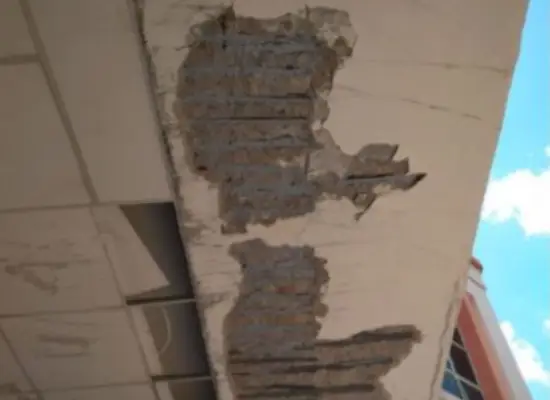
Condensation forms when humid air contacts a sufficiently cool surface and moisture develops on that surface.
Seepage involves water travelling through or around part of the building.
A practical clue is whether the dampness has a relationship with rainfall or water use.
If surface moisture improves substantially with ventilation and does not correspond with rain, plumbing or wet-area use, condensation becomes more plausible.
If the same patch repeatedly becomes damp after rain or remains wet despite improved ventilation, water ingress should be investigated.
Property owners should avoid assuming that every damp wall is automatically waterproofing failure.
What Are the Warning Signs of Wall Seepage?
Common signs include:
- damp or darkened patches
- peeling paint
- bubbling paint
- discolouration
- recurring mould
- musty odours
- warped finishes
- powdery mineral deposits
- visible cracking
- areas that remain damp for unusually long periods
The important distinction is that these are symptoms.
Peeling paint confirms that something is affecting the wall finish.
It does not tell you whether the water came from an external crack, pipe, window seal, wet area or another source.
Should Wall Seepage Be Repaired From the Inside or Outside?
The repair should usually target the side where the defect is allowing water into or through the building whenever that source can be established and accessed appropriately.
For example, if rain is entering through an exterior crack or failed façade joint, repeatedly waterproofing the internal stain does not correct the external opening.
Repairing the exterior crack, joint or failed sealing detail is generally more directly connected to the source.
However, not every problem can or should be repaired only from outside.
Certain concrete cracks or joints may be suitable for injection from an accessible internal side.
An adjoining wet-area defect may need to be repaired from the bathroom side.
A concealed pipe needs plumbing access.
The correct direction therefore depends on the water pathway rather than a universal rule that wall seepage must always be treated from inside or outside.
Why Should Wall Seepage Be Repaired Early?
Persistent moisture can gradually damage paint, plaster, plasterboard, joinery and other finishes around the affected area.
Where moisture is associated with significant concrete deterioration, additional concrete repair may also become necessary.
That does not mean every damp patch is a structural problem.
However, warning signs such as larger cracks, loose concrete, pieces breaking away or exposed reinforcement deserve further investigation.
Early repair can also reduce repeated spending on repainting and cosmetic reinstatement before the source has been corrected.
How Does Allstar Diagnose Wall Water Seepage?
Allstar’s current published process begins with consultation and inspection before treatment is selected.
A wall-seepage assessment may consider:
- when the dampness appears
- rainfall patterns
- adjoining bathrooms or wet areas
- visible cracks
- external-wall condition
- window perimeters
- roof-wall junctions
- drainage
- plumbing routes
- previous repair history
More complicated cases may justify additional moisture checks, controlled testing or targeted opening where appropriate.
The objective is not to use every diagnostic technique on every wall.
It is to gather enough evidence to form a reasonable connection between the visible dampness and its likely source.
What Should You Do Before a Wall Seepage Inspection?
Property owners can make diagnosis easier by documenting the problem before repainting it.
Take clear photographs.
Note when the damp patch appears or becomes darker.
Record whether it follows rainfall or bathroom use.
If the wall is beside a bathroom, window or known pipe route, mention that during the inspection.
Keep previous waterproofing quotations, invoices, photographs or warranty documents if earlier repairs have already been attempted.
Avoid covering the stain immediately before the site visit because the pattern may provide useful clues about where moisture is travelling.
What Is the Best Repair for a Water Seepage Wall?
There is no single best repair.
The correct treatment depends on the source and condition of the wall.
When Are Waterproofing Coatings Used?
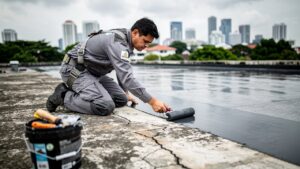
Waterproofing coatings may be suitable for properly prepared external-wall surfaces where improved resistance to rainwater penetration is required.
Cracks, failed joints, loose material and unstable surfaces should be addressed before coating where relevant.
Coating should be part of the repair system, not simply a replacement for decorative paint over a damp patch.
What Is Nano-Technology Coating?
Allstar currently describes nano-technology coating as one of its treatment options for suitable wall-seepage conditions.
It is presented as a liquid-applied treatment for suitable porous substrates intended to improve water repellency.
Its suitability still depends on the wall condition.
It does not replace plumbing work, significant crack repair or repair of defective building components where those are causing the water ingress.
When Is PU Injection Used?
PU injection can be used for suitable water pathways through concrete cracks, joints and voids.
Polyurethane material is introduced into the relevant pathway to help seal the route through which moisture is travelling.
Injection should be selected because the defect is appropriate for injection—not merely because the method can reduce hacking.
If rain enters through an external joint or water comes from a pipe, that source still needs repair.
When Does the Wall Need Concrete Repair?
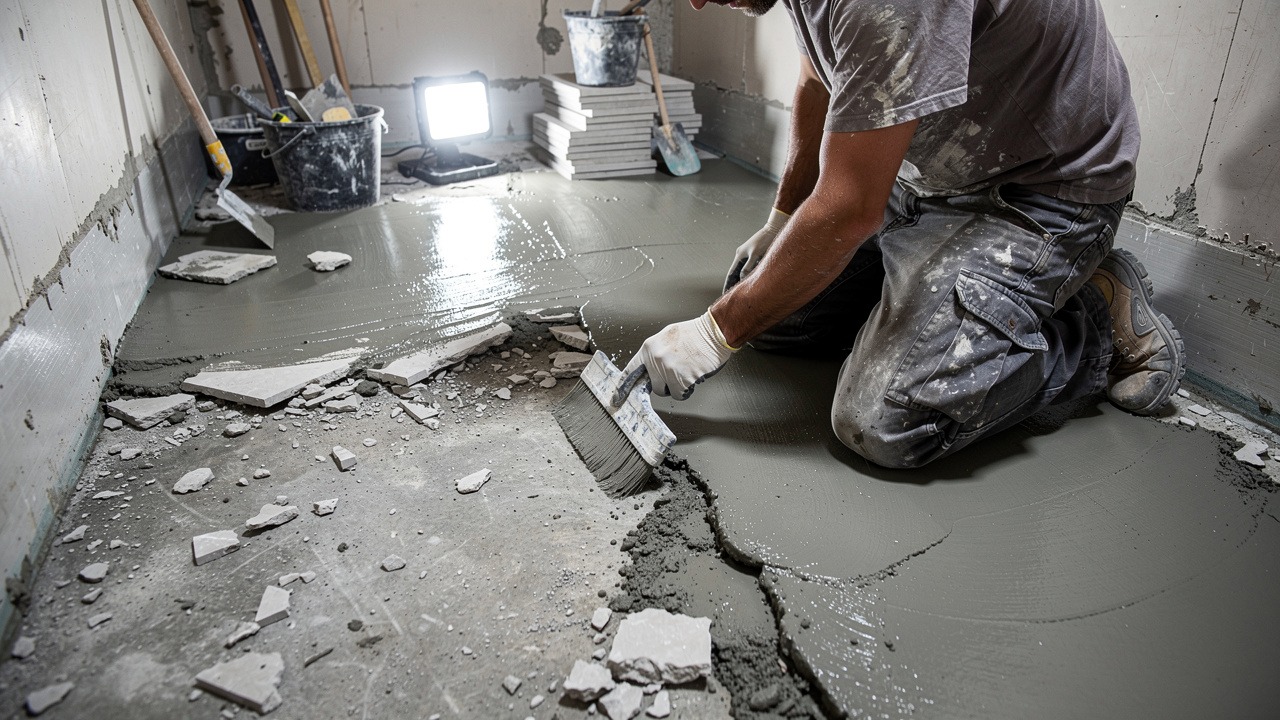
Concrete repair becomes relevant where the underlying concrete is significantly cracked, spalling or otherwise deteriorated.
Waterproofing and concrete repair address related but different issues.
Waterproofing addresses moisture penetration.
Concrete repair addresses the condition of the concrete itself.
If damaged concrete forms part of the water pathway, both may need to be considered.
Can Wall Seepage Be Repaired Without Hacking?
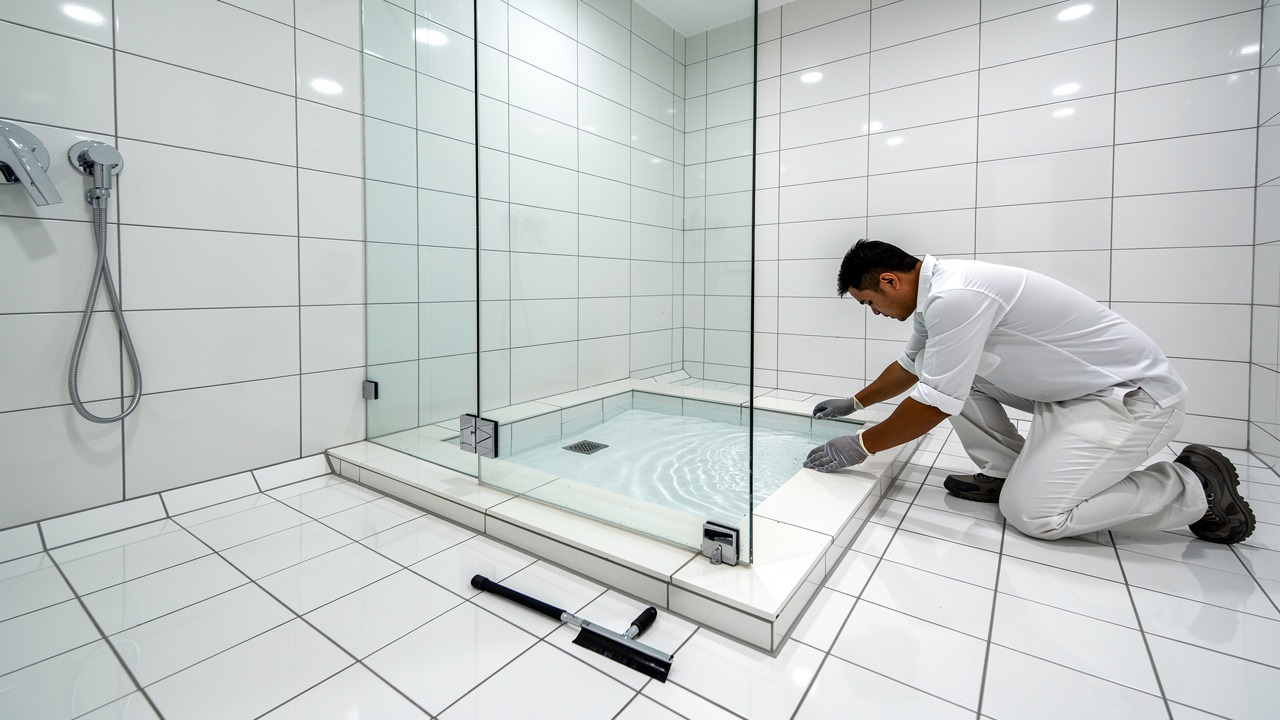
Sometimes.
Localised cracks, joints or external defects may be repairable without opening large sections of the interior wall.
Certain concrete leakage pathways may also be suitable for injection.
However, less-invasive treatment is not always the correct treatment.
If damaged material needs removal, a pipe needs access or the underlying substrate has deteriorated substantially, more invasive work may be required.
A contractor should therefore explain why a non-hacking method can address the confirmed defect rather than simply promising that hacking will never be needed.
Can Exterior Wall Seepage Be Fixed Without Scaffolding?
Sometimes.
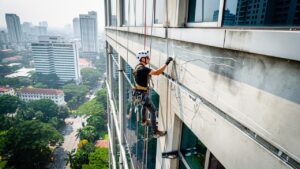
For suitable high-level areas, rope access can provide an alternative way to reach exterior façades without installing full scaffolding around the building.
Allstar states that its difficult-access exterior services use IRATA-certified professionals.
Rope access itself is not the waterproofing repair.
It is an access method.
Once the technicians reach the affected location, the relevant crack repair, joint sealing, coating or concrete work still needs to be completed.
Who Handles External-Wall Seepage in an HDB Flat?
The answer depends on whether the water is coming from within the flat or from common property.
HDB’s current maintenance guidance states that where repair work is required to an external wall or rooftop, the Town Council bears the full repair cost.
This means an HDB owner experiencing dampness that appears to originate from an external common-property wall should not automatically arrange private façade repair without first establishing responsibility.
If the suspected source is instead inside the flat—such as a privately maintained plumbing component or wet-area issue—the repair responsibility can be different.
Identifying the source therefore affects not only the repair method but also who should be contacted.
How Long Does Wall Seepage Repair Take?
There is no universal repair duration.
A small accessible joint repair can have a very different timeline from high-rise façade work or concrete restoration.
The total duration can depend on:
- diagnosis
- access
- repair area
- crack or joint preparation
- concrete repair
- coating or injection method
- curing
- reinstatement
- weather for exterior work
Rain can be particularly relevant when exterior coatings, sealants or repairs require suitable surface and curing conditions.
Property owners should therefore ask for a project-specific timeline rather than assuming every wall-seepage repair can be completed within the same number of hours or days.
How Much Does Wall Seepage Repair Cost in Singapore?
There is no reliable fixed rate for wall-seepage repair because the size of the visible damp patch does not necessarily reflect the complexity of the underlying defect.
Cost can depend on:
- source of the water
- treatment area
- wall condition
- access
- crack or joint repair
- concrete deterioration
- waterproofing method
- rope access or other high-level access
- reinstatement
Resealing an accessible window joint is fundamentally different from repairing a high-rise external façade.
Likewise, an internal wall affected by plumbing requires a different scope from an external rainwater-seepage problem.
Allstar’s current waterproofing guidance also emphasises that preparation, access, treatment method and substrate condition can materially affect quotations.
A site-specific quotation is therefore more useful than estimating the repair from the number of square metres of visible staining.
What Should a Wall-Seepage Quotation Include?
A useful quotation should explain:
the suspected source
the treatment area
the repair method
crack/joint preparation
concrete repair where relevant
coating or injection work
specialised access
reinstatement
estimated timeline
warranty
This makes it easier to compare whether two contractors are actually quoting for the same repair.
A lower price may simply reflect a smaller treatment scope.
How Do You Know Whether Wall Seepage Has Been Fixed?
The repair should be monitored under the conditions that previously triggered the moisture after the treatment has cured.
If the wall became damp after rain, inspect the affected area after later rainfall.
If the issue was linked to bathroom use, monitor the wall once normal use resumes according to the contractor’s instructions.
Do not judge success only by the appearance of the old stain.
Concrete, plaster and finishes can require time to dry after the source has already been repaired.
Watch instead for:
- fresh dampness
- renewed discolouration
- new bubbling paint
- moisture spreading from the same area
- recurrence during the same triggering conditions
Allstar’s current specialist guidance likewise recommends assessing repairs against the conditions that previously caused the leakage.
Can Wall Seepage Return After Repair?
Yes.
The original water pathway may remain repaired while a different defect develops later.
New cracks can form.
Sealants can age.
Drainage can become blocked.
Another part of an older wall or waterproofing system can deteriorate.
Plumbing can also develop a new fault.
A returning stain should therefore be investigated before assuming that the previous repair has failed.
Compare the new moisture pattern with the original repair area and warranty scope.
What Warranty Does Allstar Provide?
Allstar currently states that its repair solutions are supported by a one-year warranty, with extended arrangements available for discussion depending on the project.
Property owners should confirm the exact coverage in writing.
The warranty should identify:
- the repaired area
- duration
- important exclusions
- what happens if moisture recurs
A repaired exterior crack, for example, should not automatically be assumed to cover a future unrelated pipe leak elsewhere on the property.
How Can You Prevent Wall Seepage From Returning?
Prevention should focus on the building elements that keep water out.
External cracks and joints should be investigated when they appear.
Deteriorated window sealant should not be ignored if water enters during rain.
Gutters and drainage routes should be kept clear where they affect water flow around walls.
Later renovation or façade work should avoid damaging existing waterproofing or sealed joints.
After a repair, keep the quotation, photographs, invoices and warranty documentation.
These records can make it much easier to determine whether future dampness relates to the original repair or a new defect.
Adequate ventilation inside the property is also useful because it helps control condensation and makes genuine water ingress easier to distinguish from ordinary indoor moisture.
Why Consider Allstar for Wall Seepage Repair in Singapore?
Allstar’s practical distinction is that wall seepage can be assessed alongside several related repair capabilities rather than being treated only as a coating problem.
Its current service offering includes water-seepage and leakage repair, wet-area waterproofing, concrete repair and difficult-access exterior work. Its current guidance also emphasises inspection before method selection.
Allstar states that its website displays BCA and bizSAFE3 credentials, that IRATA-certified professionals are used for specialist rope-access work and that it has more than 20 years of industry experience with more than 3,000 properties served. These remain company-published credentials and figures.
For property owners, the more important point is that a damp wall can have several causes.
A wider repair capability allows the treatment to follow the source rather than assuming every wall needs the same coating.
Frequently Asked Questions About Water Seepage Walls in Singapore
What Causes Water Seepage Through Walls?
Common causes include external cracks, deteriorated façade or window joints, failed waterproofing, wet-area leakage, concrete cracks and concealed plumbing. The timing and location of the dampness can provide clues, but inspection is needed before treatment is confirmed.
Is Wall Seepage Usually Caused by Rain or Plumbing?
Either is possible. Dampness that repeatedly follows rainfall can indicate an external-wall, façade, window or roof-related source. Persistent moisture regardless of weather may justify plumbing or adjoining-wet-area checks.
Should Wall Seepage Be Repaired From the Inside or Outside?
The repair should target the actual source. Rain entering through an exterior crack or façade joint generally requires attention to that exterior defect, while certain concrete cracks may be treatable internally through injection. Plumbing and wet-area problems require their own appropriate access.
Can Wall Seepage Be Repaired Without Hacking?
Sometimes. Localised cracks, joints, coatings or suitable concrete leakage pathways may allow less-invasive treatment. Plumbing faults, deteriorated concrete or extensively failed substrates can still require opening or removal work.
Can PU Injection Fix Wall Seepage?
PU injection can help with suitable water-bearing concrete cracks, joints or voids. It does not repair every seepage source and should not replace exterior wall repair, plumbing or wet-area waterproofing when those are responsible.
Who Handles External-Wall Seepage in an HDB Flat?
If repair work is required to an HDB external wall or rooftop that forms part of common property, HDB’s current guidance states that the Town Council bears the repair cost.
How Much Does Wall Seepage Repair Cost in Singapore?
There is no universal rate. Cost depends on the source, repair method, treatment area, wall condition, access, concrete work, coating or injection requirements and reinstatement. A site-specific quotation is more meaningful than pricing only from the visible damp area.
How Long Does Wall Seepage Repair Take?
Duration varies according to diagnosis, access, repair type, preparation, curing, reinstatement and weather. A local joint repair and high-rise façade waterproofing project should not be expected to take the same amount of time.
How Do I Know Whether the Wall-Seepage Repair Worked?
After the treatment has cured, monitor the area under the conditions that previously caused the dampness. Rain-related seepage should not return after later rainfall, while wet-area-related moisture should not recur when normal use resumes.
Does Allstar Provide a Warranty for Wall-Seepage Repairs?
Allstar currently states that its repair solutions carry a one-year warranty, with extended arrangements available for discussion. The exact repair area and project-specific conditions should be confirmed in writing.
Final Thoughts: How Should You Fix a Water Seepage Wall in Singapore?
A water seepage wall should not be treated as a paint problem.
A damp patch may come from:
an external crack
a failed façade or window joint
wet-area waterproofing
a concrete defect
a concealed pipe
another adjoining building component
Those causes can produce similar-looking stains but require very different repairs.
The strongest repair process therefore follows a simple sequence:
identify the water source → repair the failed component → allow the wall to dry → verify the repair → reinstate the finishes.
For HDB owners, source identification can also determine whether the issue should be handled privately or referred to the Town Council for common-property external-wall or rooftop repair.
Allstar Waterproofing & Services currently provides several related leakage, waterproofing and concrete-repair capabilities, with its published process beginning with inspection before a tailored method is proposed.
For homeowners, landlords, managing agents and commercial property owners, the priority should be to avoid repeatedly covering the evidence while the water pathway remains active.
Find where the water begins.
Repair the crack, joint, wall, pipe or adjoining component responsible.
Then confirm that the dampness does not return under the same conditions.
That gives the repair a much stronger foundation than another layer of paint over a wall that is still wet behind the surface.