A ceiling stain that keeps returning, water appearing around a bathroom or dampness that becomes worse after heavy rain is usually evidence that water is still entering the property somewhere.
The place where moisture becomes visible is not necessarily where it started.
Water can travel through concrete slabs, screed, cracks, pipes, roof structures, joints and concealed spaces before appearing on a ceiling or wall. Two similar-looking stains can therefore require completely different repairs.
That is why choosing a water leakage contractor in Singapore should begin with finding the likely source rather than deciding in advance that the problem needs hacking, injection, waterproof coating or another particular treatment.
Allstar Waterproofing & Services currently provides water-seepage and leakage repair across residential, commercial and industrial properties. Its published services include ceiling and wall leakage repair, wet-area waterproofing, roof repair and waterproofing, concrete repair and difficult-access exterior work. Allstar states that its process begins with a comprehensive site inspection before a repair method and quotation are proposed.
For property owners, the most useful question is therefore not:
“How quickly can someone patch this leak?”
It is:
“Where is the water entering, what has failed and why does the proposed repair address that defect?”
Quick Answer: How Do You Choose a Water Leakage Contractor in Singapore?
Choose a contractor that inspects the property before recommending treatment, identifies the likely source of the leak and explains why the proposed repair method suits that particular defect.
A useful quotation should clearly state:
the suspected problem → treatment area → repair method → preparation → hacking if required → reinstatement → access → verification → warranty.
When comparing contractors, do not judge only by the lowest total or longest warranty.
Compare the diagnosis, how well the repair method fits that diagnosis, the clarity of the written scope, technical capability, price transparency and what happens if leakage returns. Allstar’s current 2026 contractor guide uses these same six areas when explaining how homeowners should compare water-leakage contractors.
What Causes Water Leakage in Singapore Properties?
Water leakage usually begins when water finds a weakness in a part of the building that should either keep moisture out or direct it safely away.
Possible causes include:
- failed waterproofing membranes
- deteriorated screed
- concrete cracks or joints
- damaged roof components
- ageing sealant
- drainage problems
- plumbing faults
- external-wall or façade defects
Singapore’s regular rainfall and humid environment repeatedly expose roofs, balconies, façades, bathrooms and toilets to moisture.
HDB also identifies deterioration of waterproof membrane and screed as a common reason for inter-floor ceiling leakage, particularly in older flats and wet areas such as bathrooms and toilets.
The important point is that “water leakage” describes a symptom, not one specific repair.
What Are the Common Signs of Water Leakage?
Recurring ceiling or wall stains are among the most obvious warning signs.
Other symptoms may include peeling or bubbling paint, damp plaster, visible dripping, recurring mould or moisture appearing after specific events such as heavy rain or bathroom use.
Timing can provide useful clues.
Leakage After Heavy Rain
If staining appears mainly after prolonged rainfall, the roof, external wall, balcony or another exposed building element may need investigation.
Leakage After Bathroom Use
If seepage appears below a bathroom or toilet after repeated use, the source may involve the wet-area membrane, screed, floor-waste area, drainage or plumbing.
Leakage Around a Pipe Route
Water consistently appearing around a known plumbing route may indicate a pipe or fitting rather than a waterproofing defect.
These patterns help narrow the investigation, but they should not be treated as a complete diagnosis on their own.
Why Is Finding the Source More Important Than Patching the Stain?
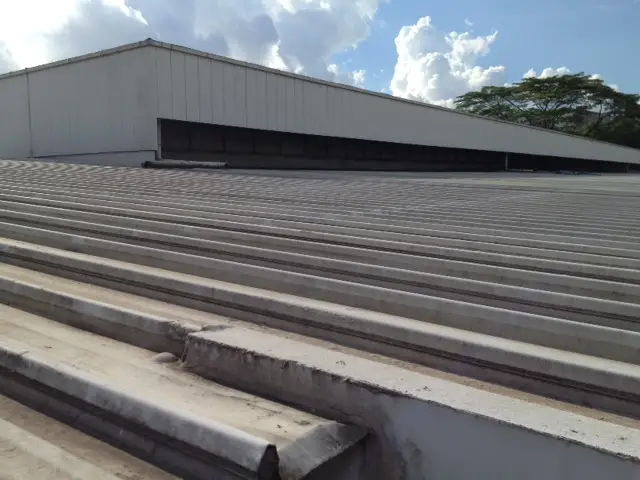
Water can move through a building before it becomes visible.
This means repairing only the surface where the stain appears can leave the actual defect untouched.
Painting the underside of a leaking bathroom does not restore a failed membrane above.
Applying waterproof coating indoors does not stop rain entering through a defective roof joint.
PU injection into one crack does not repair a leaking pipe.
Allstar’s current leakage guidance therefore follows a source-first sequence: identify the defect, repair it, allow the affected area to dry and only then reinstate damaged finishes.
Should You Call a Plumber or a Water Leakage Contractor?
It depends on what has failed.
A plumber is usually the more appropriate trade when water is escaping from:
- water pipes
- sanitary pipes
- fittings
- taps
- plumbing fixtures
- other plumbing systems
A water leakage or waterproofing contractor is more relevant when water is entering through:
- failed waterproofing membranes
- concrete cracks or joints
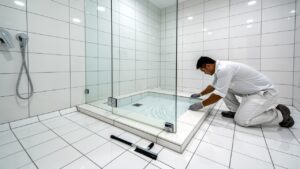
- wet areas
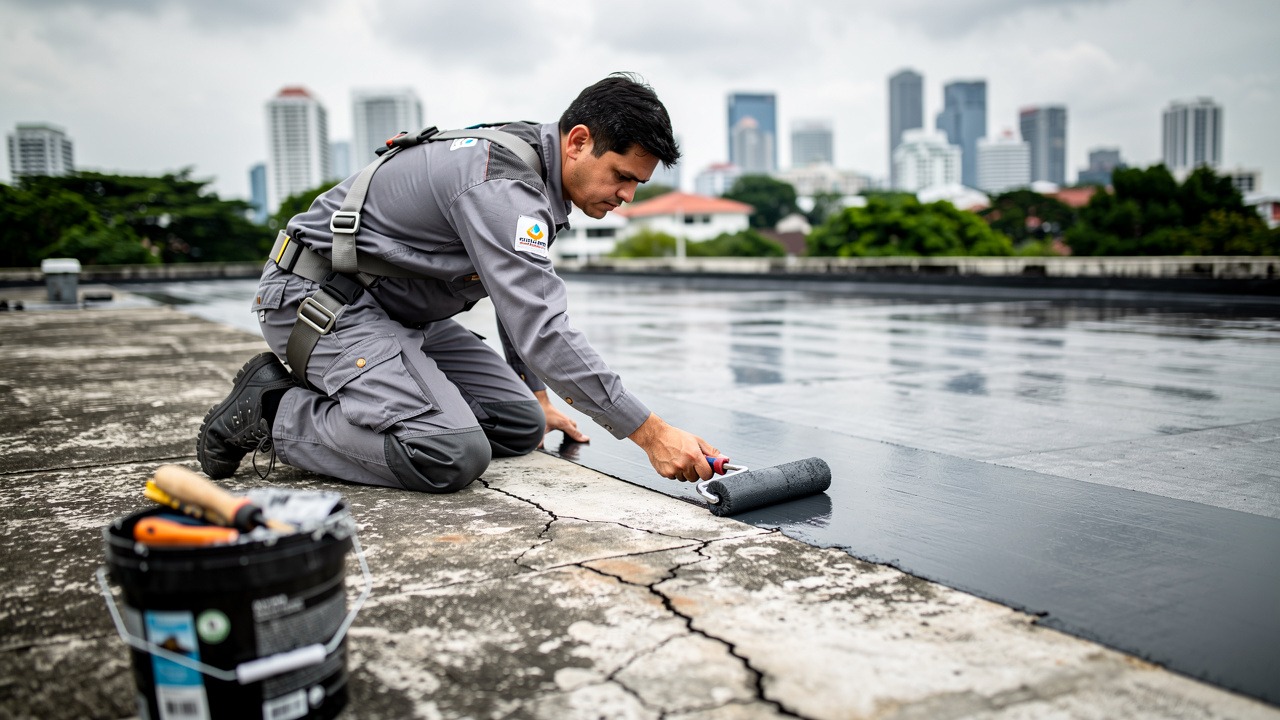
- roofs
- balconies
- façades
- building-envelope defects
Some cases overlap.
A ceiling below a bathroom, for example, could be affected by either waterproofing or plumbing.
Allstar’s current repair guide similarly distinguishes plumbing-related problems from membrane, concrete, roof and wet-area leakage rather than presenting waterproofing as the solution to every leak.
When the source is uncertain, investigate before choosing the trade.
What Water Leakage Services Does Allstar Provide?
Allstar currently provides several leakage and waterproofing services because the correct treatment depends on the failed building component.
Its published service scope includes:
- ceiling and wall leakage repair
- water-seepage repair
- wet-area waterproofing
- roof waterproofing and repair
- concrete repair
- difficult-access exterior work
Allstar also uses PU injection for suitable concrete leakage conditions.
The advantage of a wider service range is that a ceiling stain does not have to be forced into one standard repair method.
How Does PU Injection Repair Water Leakage?
PU injection, also known as polyurethane injection or PU grouting, is used for suitable leakage through concrete cracks, joints, pores and honeycombed areas.
Polyurethane material is injected into the affected pathway. When appropriate formulations come into contact with moisture, they react and expand, helping fill the route through which water has been travelling.
This can make PU injection useful for selected localised concrete leaks.
However, it is not a universal repair.
PU injection does not replace:
- plumbing repair for a leaking pipe
- roof repair for failed flashing or roof components
- full wet-area repair where the membrane or screed has deteriorated extensively
The useful question is:
“Which confirmed water pathway is this injection intended to seal?”
Can Water Leakage Be Repaired Without Hacking?
Yes, some leakage problems can be treated without extensive hacking.
Possible less-invasive methods can include PU injection, Flood Infusion and certain overlay systems when the defect and substrate are suitable.
HDB recognises several alternative approaches for inter-floor leakage alongside conventional re-screeding, including chemical grout or PU injection, Flood Infusion and overlay waterproofing systems.
However, avoiding hacking should not become more important than fixing the defect correctly.
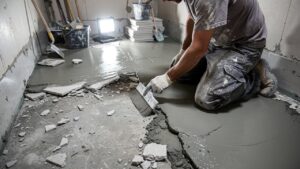
If tiles are loose, screed has deteriorated, drainage needs correction or the waterproofing system has failed extensively, opening the affected area may provide the necessary access for proper repair.
A contractor promising “definitely no hacking” before seeing the site may therefore be selecting the method too early.
How Are Ceiling Leaks Repaired?
Ceiling-leak repair begins by identifying what is located above or behind the affected ceiling and when the moisture appears.
Possible causes include:
- failed bathroom waterproofing
- roof leakage
- plumbing
- concrete cracks
- balcony seepage
- external-wall defects
If the source is a bathroom above, the wet area may need repair.
If the leakage is travelling through a suitable concrete crack, PU injection may be considered.
If rain is entering through the roof, the roof defect needs attention.
The ceiling itself should generally be restored only after the source has been addressed and the affected materials have had adequate time to dry.
Can a Ceiling Leak Be Repaired From Below?
Sometimes, but not every ceiling leak can be solved from the underside.
Certain leakage travelling through a specific concrete crack or joint may be suitable for injection from below.
However, a failed waterproof membrane in the bathroom above cannot automatically be assumed to be permanently repaired simply because treatment is applied to the lower ceiling.
Likewise, rain entering through a roof still requires the relevant roof defect to be repaired.
Whether underside treatment is appropriate depends on the confirmed water pathway.
How Are Roof Leaks Different From Bathroom Leaks?
Roof leakage is often linked to rainfall, while bathroom leakage is more commonly associated with wet-area use, membrane deterioration, drainage or plumbing.
Roof defects can involve:
- flashing
- fasteners
- roof joints
- cracked tiles
- deteriorated membrane
- capping
- drainage
Rainwater can enter at one location and travel before becoming visible inside.
Bathroom leakage follows a different set of pathways through screed, membrane, floor details, plumbing or the floor slab.
The repair therefore needs to match the relevant building system rather than the location of the indoor stain.
When Does Water Leakage Require Concrete Repair?
Not every leak means the concrete is damaged.
However, concrete repair may be necessary when leakage occurs together with:
- significant cracking
- honeycombing
- exposed reinforcement
- spalling
- loose or deteriorated concrete
Waterproofing addresses moisture penetration.
Concrete repair addresses deterioration of the material itself.
Where both are present, simply applying coating over damaged concrete may not be enough.
Allstar’s published services include concrete repair alongside waterproofing and leakage work.
What Happens During a Water Leakage Inspection?
A proper inspection should consider more than the size of the stain.
The contractor should ask:
- When did the leak begin?
- Does it occur only during rain?
- Is it associated with bathroom use?
- Is it constant?
- Has the area been repaired before?
- What is located above or behind it?
Visible cracks, roof details, wet areas, drainage conditions, concrete deterioration and plumbing routes may also be relevant.
Allstar currently advertises free comprehensive site inspections for water-leakage cases and states that straightforward projects may receive an on-site quotation, while more complicated proposals may require approximately one to three working days.
What Should You Do Before a Water Leakage Inspection?
Property owners can make the investigation easier by documenting the leak before the contractor arrives.
Take photographs of the stain, drip or damp area.
Note when it appears.
If the problem is rain-related, record whether it happens during light rain or only after prolonged rainfall.
If it appears below a bathroom, note whether showering or other water use seems to trigger it.
Avoid immediately repainting the affected area because the stain pattern may help the contractor understand how moisture is moving.
If there were previous repairs, keep the old quotation, photographs or warranty documents available.
Where practical, provide access to the room, bathroom, roof or adjoining area that may be connected to the leak.
How Should You Compare Water Leakage Contractors?
A useful contractor comparison should cover six areas.
1. Diagnosis
Can the contractor explain what they believe has failed?
2. Repair-Method Fit
Does the proposed treatment logically address that defect?
3. Scope Clarity
Does the quotation clearly state the repair area, preparation and reinstatement?
4. Technical Capability
Does the contractor have relevant experience and capability for the required type of work?
5. Price Transparency
Can you understand what is included and what could cost extra?
6. Warranty and Follow-Up
What repair area is covered, for how long and what happens if moisture returns?
Allstar’s current homeowner guide recommends evaluating contractors through these same six factors rather than relying only on quotation price.
What Are the Red Flags When Choosing a Water Leakage Contractor?
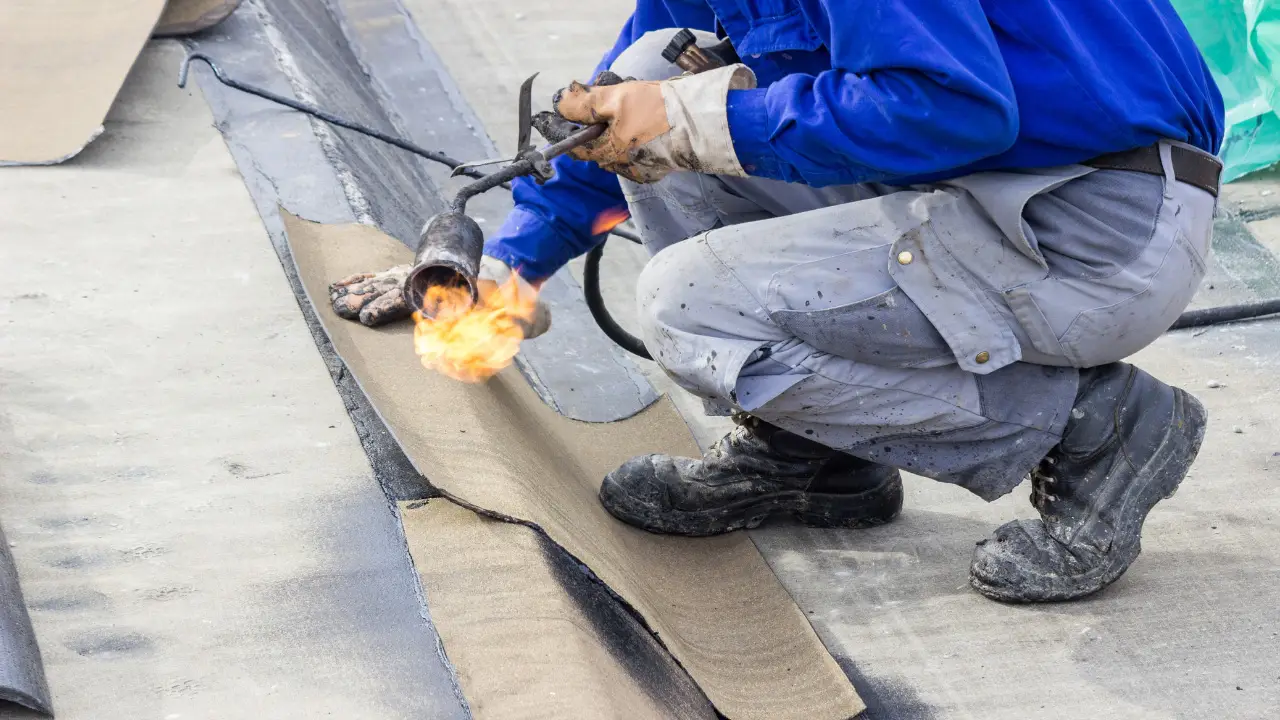
Some warning signs should make a property owner ask more questions before proceeding.
Quoting a Definitive Repair Without Inspection
A contractor may be able to give broad guidance remotely, but a firm diagnosis without examining the relevant conditions can be unreliable.
Recommending One Method for Every Leak
Not every leak needs injection, waterproof coating or hacking.
A contractor should be able to explain why the method suits this defect.
Promising “100% No Hacking” Before Diagnosis
Non-hacking methods can be useful, but they are not appropriate for every substrate or failure.
Recommending Major Hacking Without Explaining Why
Extensive removal may sometimes be necessary, but the reason should be clear.
Vague Quotation Wording
A quotation that states only “waterproofing works” without defining the treatment area, method, preparation and reinstatement makes comparison difficult.
Unclear Warranty Terms
A verbal promise is less useful than written terms identifying the covered repair area and duration.
These red flags do not automatically prove that a contractor is unsuitable, but they are good reasons to request clearer technical explanations before approving the work.
How Much Does Water Leakage Repair Cost in Singapore?
There is no universal water-leakage repair rate because the problem can involve very different types of work.
A small concrete injection, bathroom waterproofing job, roof repair and façade repair have different labour, materials, access and reinstatement requirements.
Allstar currently publishes approximately S$800 to S$1,500 as a planning reference for waterproofing an average bathroom of around 4–6 m². This is Allstar’s own bathroom-waterproofing reference—not a universal Singapore water-leak repair price.
A project requiring hacking, tile replacement, screed work, plumbing interfaces, extensive concrete repair or specialised access can cost very differently.
The final quotation therefore depends on the source and repair scope.
Why Can Two Water Leakage Quotations Be Very Different?
Two contractors may be pricing different diagnoses.
One may believe a local crack can be injected.
Another may believe the entire wet-area waterproofing system has deteriorated.
One quotation may include hacking, preparation and tile reinstatement.
Another may exclude them.
Roof and façade projects may also involve different access arrangements.
The useful comparison is therefore:
suspected source → treatment area → method → preparation → hacking → reinstatement → access → verification → warranty.
Only after those items are reasonably comparable does comparing the final price become meaningful.
What Should a Water Leakage Repair Quotation Explain?
A clear quotation should identify the affected or treatment area.
It should explain the repair method and relevant preparation.
If hacking is needed, the scope should state what will be removed.
If tiles, screed or finishes need reinstatement, confirm whether reinstatement is included.
For roof or external work, any specialised access requirements should also be understood.
The quotation should additionally identify the applicable warranty terms.
Allstar’s current guidance likewise recommends comparing the method, treatment area, preparation, hacking, reinstatement, access and warranty rather than price alone.
How Long Does Water Leakage Repair Take?
There is no universal repair duration.
A small surface or local injection repair may have a much shorter timeline than complete wet-area waterproofing, concrete repair or extensive roof work.
Duration can depend on:
- investigation
- treatment area
- preparation
- repair method
- hacking
- curing
- reinstatement
- access
- weather
Allstar’s current leakage guidance notes that small repairs may sometimes be completed relatively quickly, while larger waterproofing, roof, concrete or wet-area projects may require several days or longer depending on curing and access.
For larger projects, Allstar’s wet-area process also states that completion can range from weeks to months depending on the scale and complexity of the work.
Owners should therefore ask for a project-specific timeline.
What Warranty Does Allstar Provide?
Allstar currently states that its water-leakage repair work is backed by a one-year warranty, with extended arrangements available for discussion depending on the project.
Owners should confirm the project-specific terms in writing.
Useful questions include:
- Which repair area is covered?
- How long does coverage apply?
- What type of recurrence is included?
- Are there exclusions?
- What happens if moisture reappears?
A different roof joint or new wall crack can create a new leak later, so a warranty should not automatically be interpreted as covering every possible future water problem on the property.
What Credentials Does Allstar Display?
Allstar’s current website states that it displays BCA and bizSAFE3 credentials and membership with the Singapore Contractors Association.
The company also states that it has more than 20 years of industry experience and has served more than 3,000 residential, commercial and industrial properties. These are Allstar’s current company-published credentials and figures.
Credentials provide useful context, but property owners should still assess the diagnosis and repair proposal for the individual leak.
Who Pays for a Ceiling Leak Between HDB Flats?
For inter-floor ceiling leakage between HDB flats, the upper owner is not automatically responsible for the entire repair cost.
HDB states that flat owners are responsible for maintaining their respective floor and ceiling slabs. When repair of those slabs is required to stop the leak, the upper and lower owners generally arrange the work and split the relevant costs.
HDB encourages the lower owner to approach the upper neighbour so the possible cause can be established and a contractor engaged where required.
The situation differs when the source comes from common property.
For a top-floor HDB flat, leakage from the block roof originates from common property maintained by the Town Council.
Identifying the source therefore helps determine both the repair method and who needs to be involved.
What Should You Do When Water Appears Near Electrical Points?
Water around sockets, switches, lights or other electrical fittings should be treated as a safety issue rather than only a waterproofing problem.
Avoid touching wet electrical equipment or exposed fittings.
Keep occupants away from the affected area and arrange appropriate professional assessment.
Where electrical isolation can be carried out safely by a qualified person or according to the property’s established safety procedures, the affected circuit may need to be isolated.
The leak source should then be investigated as soon as practical.
Cosmetic ceiling repair can wait until the water and electrical risks have been addressed.
How Do You Know Whether a Leakage Repair Has Worked?
The repair should be assessed against the conditions that previously caused the leakage.
If moisture appeared only during heavy rain, observe the area after later rainfall once the repair system has cured.
If the leak was connected to wet-area use, monitor the affected area after normal use resumes according to the contractor’s curing instructions.
Watch for:
- renewed staining
- dampness
- bubbling paint
- visible moisture
- a new nearby wet patch
Allstar’s current guidance recommends monitoring repaired areas under the same conditions that previously triggered the leak rather than judging success only by whether the old stain has been repainted.
Can Water Leakage Return After Repair?
Yes.
A correctly repaired water pathway can remain resolved while a different defect develops later.
Buildings continue to age and move.
New cracks can form.
Drainage can become blocked.
Another section of membrane can deteriorate.
A plumbing failure can create a completely separate source.
A returning stain therefore needs investigation rather than automatically being labelled failure of the original repair.
What Should You Do If Water Leakage Returns?
Document the problem before covering it.
Take photographs.
Note when the moisture appears and what conditions trigger it.
Review the original quotation, treatment area and warranty.
Then contact the contractor so the new leakage can be compared with the original repair.
This helps establish whether the moisture is recurring through the treated area or entering from somewhere new.
Why Consider Allstar as a Water Leakage Contractor?
Allstar’s practical distinction is the range of repair methods it can consider after inspection.
Its current services include ceiling and wall leakage repair, wet-area waterproofing, roof repair and waterproofing, concrete repair and difficult-access exterior work.
Allstar also currently advertises free comprehensive inspections, transparent quotations and a one-year repair warranty, with extended warranty arrangements available for discussion. The company reports more than 20 years of industry experience and more than 3,000 properties served. These remain company-published claims.
For the property owner, the useful value is not simply having access to more waterproofing products.
It is being able to match different water pathways with different repair methods after the problem has been assessed.
Frequently Asked Questions About Water Leakage Contractors in Singapore
How Do I Choose a Water Leakage Contractor in Singapore?
Choose a contractor that investigates before recommending treatment, explains the suspected source, matches the repair method to that defect and provides a written scope covering preparation, hacking or reinstatement where relevant, price, verification and warranty.
Should I Call a Plumber or a Water Leakage Contractor?
Call a plumber when the problem clearly involves pipes, fittings or plumbing systems. A water-leakage or waterproofing contractor is more appropriate for failed membranes, concrete seepage, wet-area leakage, roofs and building-envelope water ingress. If the source is unclear, investigate first.
Can Water Leakage Be Repaired Without Hacking?
Yes, some leakage can be treated through methods such as PU injection, Flood Infusion or selected overlay systems. Extensive screed, membrane or substrate deterioration can still require hacking and reinstatement. HDB recognises several repair methods depending on the severity and circumstances of inter-floor leakage.
Can a Ceiling Leak Be Repaired From Below?
Sometimes. Suitable concrete cracks or joints may be treated from below using injection techniques, but a failed waterproof membrane or roof defect above cannot automatically be solved by treating only the underside of the ceiling.
How Much Does Water Leakage Repair Cost in Singapore?
There is no universal price. Allstar currently publishes approximately S$800–S$1,500 as a planning reference for waterproofing an average 4–6 m² bathroom, but this is bathroom-specific and should not be treated as the cost of every water-leak repair.
How Long Does Water Leakage Repair Take?
Duration depends on the source, repair method, treatment area, preparation, hacking, curing, reinstatement, access and weather. Small local repairs and major roof or wet-area projects should not be expected to follow the same timeline.
What Should a Water Leakage Quotation Include?
A useful quotation should identify the treatment area, proposed repair method, preparation, hacking where applicable, reinstatement, access requirements, repair verification and warranty.
How Do I Know Whether the Leak Has Been Fixed?
After the repair has cured, monitor the area under the conditions that previously caused the leak. Rain-related leakage should remain dry during later rainfall, while wet-area leakage should not recur after normal use resumes according to the contractor’s instructions.
Can Water Leakage Return After Repair?
Yes. The original defect may remain repaired while new cracks, drainage problems, membrane deterioration, roof damage or plumbing failures create another pathway. A returning leak should therefore be investigated.
Does Allstar Provide a Warranty?
Yes. Allstar currently states that its repair work carries a one-year warranty, with extended arrangements available for discussion. Project-specific coverage and exclusions should be confirmed in writing.
Final Thoughts: How Should You Choose a Water Leakage Contractor in Singapore?
Finding a water leakage contractor should begin with finding the source.
A stain below a bathroom may involve waterproofing, but it could also involve plumbing.
A mark that appears after rain may come from the roof, façade or balcony.
A concrete crack may be suitable for PU injection.
Deteriorated concrete may require concrete repair.
The visible symptom alone does not decide the method.
The defect does.
When comparing contractors, ask:
What do you believe has failed?
What evidence supports that diagnosis?
Why does the proposed repair suit that defect?
What preparation and reinstatement are included?
How will you verify that the repair worked?
What happens if the treated area leaks again?
Allstar Waterproofing & Services currently provides several leakage and waterproofing services and states that its process begins with comprehensive inspection before the repair scope is selected.
For HDB owners, condominium residents, landed homeowners, landlords, managing agents and commercial property owners, that source-first approach is more useful than selecting the fastest patch or least disruptive method before the problem has been investigated.
Fix the water pathway rather than simply covering the stain, and the repair has a much stronger foundation for keeping the affected area dry.