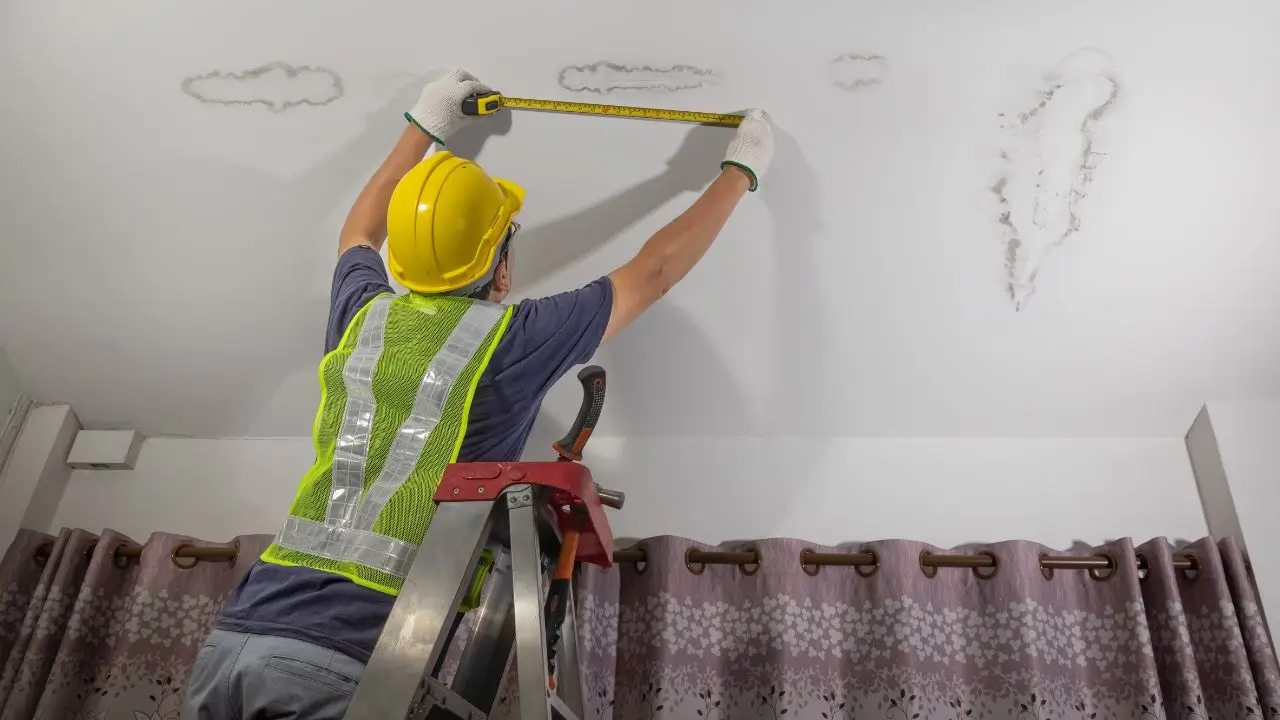
Water leakage in Singapore often begins with something small: a brown ceiling stain, peeling paint, damp skirting, a musty smell or a patch that becomes darker whenever it rains.
The difficult part is that the place where water appears may not be where the leak actually started.
Water can move through concrete slabs, screed, joints, pipes, roof structures and concealed cavities before becoming visible somewhere else. A ceiling stain below a bathroom may come from failed wet-area waterproofing, while a similar stain on a top-floor ceiling could originate from the roof. A damp wall could involve an exterior joint, plumbing fault or moisture travelling from another part of the building.
For that reason, effective water leakage repair should follow this sequence:
observe the symptom → identify the trigger → locate the likely source → confirm the water path → repair the defect → verify that the leak has stopped.
Allstar Waterproofing & Services provides leakage investigation and repair for residential, commercial and industrial properties in Singapore. Its published guidance also discusses the use of thermal imaging, acoustic detection and moisture-measuring equipment for suitable hidden-leak investigations.
This guide explains how to narrow down the source of a leak, how water-meter and specialist detection methods work, when to call a plumber or waterproofing contractor, which repairs may be suitable, what HDB and condominium owners should know and how to confirm that the problem has actually been solved.
What Should You Do First When You Notice a Water Leak?
Do not immediately repaint the stain or seal the nearest visible crack.
Start by recording when the water appears.
A ceiling stain that darkens only after prolonged rain suggests a different source from one that appears after the bathroom upstairs is used.
Likewise, unexplained dampness that remains present during dry weather may justify investigating a plumbing source rather than assuming the exterior wall needs waterproofing.
Take photographs before the area dries or is repainted. Note whether the problem appears after rain, showering, flushing, washing-machine use, air-conditioning or another repeatable condition.
If possible, compare the size of the stain over several occurrences.
This information gives a contractor something far more useful than simply saying:
“My ceiling is leaking.”
The first objective is to identify the most likely water source before deciding whether the solution involves plumbing, injection, waterproofing, roof repair or another method.
How Can You Tell Where a Water Leak May Be Coming From?
The timing of the leak often provides the first useful clue.
| When the moisture appears | Source to investigate first |
| Mainly during or after rain | Roof, façade, flashing, external joints, window interfaces or drainage |
| After showering or bathroom use | Wet-area waterproofing, floor interfaces, pipe penetrations or plumbing |
| Constantly, even during dry weather | Concealed pipe or another continuous plumbing source |
| Water meter moves when no water is being used | Possible concealed plumbing leak |
| Moisture follows a specific concrete crack or joint | Concrete pathway suitable for further assessment |
| Dampness includes rust stains or spalling | Concrete deterioration and reinforcement involvement |
These patterns do not prove the cause.
They help determine where the investigation should begin.
A stain below a bathroom does not automatically mean the waterproof membrane has failed. A pipe may be leaking.
Similarly, a wall that becomes damp after rain does not automatically need a waterproof coating. The actual entry point might be a failed joint, flashing detail or another defect some distance away.
What Causes Water Leakage in Singapore Properties?
Water leakage occurs when rainwater, plumbing water or water from a wet area escapes its intended route and finds another path through the building.
Bathroom and toilet waterproofing failures are common causes of inter-floor leakage because water is repeatedly used above waterproof membranes hidden beneath tiles and screed.
Roof defects can allow rainwater to enter through failed flashing, damaged membranes, open joints, cracked tiles, loose fasteners or other roof components.
External walls can admit moisture through cracks, deteriorated seals, porous surfaces and interfaces around windows or other building elements.
Concrete cracks, construction joints and honeycombed areas can also provide pathways through which water moves.
Plumbing problems form another category entirely. Corroded or damaged pipes, faulty fittings, leaking toilet cisterns and concealed water-service defects can create dampness that looks very similar to waterproofing failure.
The visible symptom therefore tells only part of the story.
How Can You Check for a Hidden Plumbing Leak at Home?
A simple water-meter check can provide an early indication.
PUB advises households to turn off all taps and appliances that use water and observe the water meter. If the meter continues moving when no water should be flowing, there is likely to be a leak somewhere in the water system. PUB’s current guidance suggests monitoring the meter for at least about ten minutes.
This test is particularly useful when there is unexplained water consumption but no obvious dripping pipe.
It does not tell you exactly where the leak is located.
A toilet cistern, concealed pipe, tap or appliance could still be responsible.
PUB also recommends watching for unusually high water bills, water-running sounds when fixtures are not in use, mould, discolouration and peeling finishes.
Where a plumbing leak is suspected, PUB advises engaging a Licensed Plumber to locate and repair regulated water-service or sanitary plumbing defects.
How Do Specialists Find Hidden Water Leakage?
A professional leakage investigation should begin with the history of the problem before advanced equipment is used.
The contractor should ask when the leak first appeared, whether rainfall or water use changes it, what rooms or building elements are located above or behind the affected area and whether any renovation or waterproofing work has previously been carried out.
The visible damage is then compared with likely water paths.
For harder-to-trace cases, specialist equipment can provide additional evidence.
Allstar’s published guidance describes thermal imaging cameras, acoustic detectors, ultrasonic detection and moisture meters as tools that may support hidden-leak investigations.
The tools should support the diagnosis rather than replace it.
A technically useful investigation should ultimately answer:
What is probably leaking? What evidence points to that source? Why should the proposed repair stop the water?
How Does Thermal Imaging Help Find a Water Leak?
Thermal imaging displays temperature differences across a surface.
Moisture can change the thermal behaviour of walls, ceilings and floors, allowing an infrared camera to reveal patterns that are not obvious to the eye.
For example, a damp section of wall may show a different thermal signature from a surrounding dry area.
Allstar states that thermal imaging forms part of its specialist guidance for suitable concealed-leak investigations.
Thermal imaging does not automatically identify the exact defect.
A temperature difference can be influenced by moisture, air-conditioning, sunlight, insulation and other factors.
The image therefore needs to be interpreted together with the building layout, moisture readings and the circumstances under which the leak appears.
What Do Moisture Meters Do?
Moisture-measuring equipment helps compare different parts of a surface and identify where elevated moisture may be present.
This is useful when the visible stain is only one part of a wider damp area.
A technician can use comparative readings to understand whether moisture appears concentrated around one location or extends across a larger section of wall, floor or ceiling.
That information can help narrow the investigation and reduce unnecessary opening of finishes.
A moisture reading still does not prove whether the original cause is a pipe, membrane, roof or façade defect.
It tells the investigator where moisture is present, not automatically why it is there.
How Does Acoustic Leak Detection Work?
Acoustic detection is particularly relevant to selected pressurised plumbing leaks.
Water escaping from a pipe can create sounds or vibrations that specialised listening equipment can detect and amplify.
This may help a technician narrow down the location of a concealed pipe leak behind a wall, beneath flooring or inside another inaccessible area.
Allstar’s published leak-detection material discusses acoustic and ultrasonic tools for suitable hidden plumbing investigations.
Like thermal imaging, acoustic equipment should be used as evidence within a broader investigation rather than treated as a machine that automatically diagnoses every type of leak.
A failed bathroom waterproofing membrane, for example, does not necessarily produce the kind of sound associated with a leaking pressurised pipe.
Should You Call a Plumber or Waterproofing Contractor?
Use a plumber when the problem clearly involves a water pipe, fitting, sanitary installation or plumbing system.
PUB specifically advises property owners to use Licensed Plumbers for regulated water-service and sanitary plumbing work.
A waterproofing or water-leakage contractor is more relevant when moisture is entering through a failed waterproofing membrane, concrete slab, roof, façade, balcony, joint or another part of the building envelope.
Allstar’s current guidance similarly distinguishes plumbing failures from building-envelope and waterproofing problems.
When the source is unclear, diagnosis should come before choosing the trade.
Calling a plumber simply because the leak is near a bathroom can waste time if the real problem is waterproofing.
Calling a waterproofing contractor to coat a wall will not repair a leaking pipe.
The trade should follow the defect.
Allstar Waterproofing & ServicesAllstar WnS AdminEdit Profile
When Is Water Leakage Urgent?
Some water leakage problems should be investigated more quickly than ordinary cosmetic dampness.
Active water close to electrical fittings deserves prompt attention because moisture and electrical installations are a dangerous combination.
A visibly bulging or deformed ceiling can indicate water accumulation above the finished surface.
Spalling or falling concrete may indicate that water has contributed to deterioration around embedded reinforcement.
A rapidly worsening leak or significant active flow should also be addressed promptly to reduce property damage.
HDB notes that untreated ceiling leaks can damage electrical items and contribute to mould growth, which is why ceiling leakage should be addressed once it is detected.
Where immediate safety is uncertain, the priority is to protect occupants and affected electrical areas before treating the cosmetic damage.
Can Water Leakage Be Repaired Without Hacking?
Yes, some leakage can be repaired with little or no hacking.
However, “no hacking” should not be treated as the objective before the source has been identified.
PU injection may be suitable where water is travelling through an appropriate concrete crack, joint or localised defect.
Selected non-hacking wet-area treatments may also be suitable when the underlying layers remain serviceable and the water pathway can be addressed effectively.
However, loose tiles, damaged screed, failed drainage falls, extensive membrane deterioration or badly deteriorated substrate may require opening the area so the underlying defect can be repaired.
A contractor who promises “100% no hacking” before inspection should therefore be asked to explain how the repair can be selected before the source is known.
How Does PU Injection Repair Water Leakage?
Polyurethane injection, or PU grouting, is commonly used where water is travelling through suitable concrete cracks, joints, voids or honeycombed areas.
The polyurethane material is injected into the pathway under pressure.
When suitable PU material comes into contact with moisture, it reacts and expands, helping fill the pathway through which water is travelling.
This can allow certain localised concrete leaks to be treated without opening a much larger area.
PU injection does not repair every type of ceiling leak.
If the true source is a leaking pipe, failed bathroom membrane or roof defect, treating the underside of the slab alone may not solve the cause.
The important question is:
What water path is the injection intended to seal?
Can a Ceiling Leak Be Repaired From Below?
Sometimes.
If water is passing through a suitable crack or joint in concrete, injection from the underside may be technically appropriate.
That does not mean every ceiling leak can be fixed from below.
If water originates from a failed waterproofing membrane in the bathroom upstairs, damaged roof detailing or a pipe leak, treating only the lower ceiling may leave the primary defect untouched.
Allstar’s current guidance makes the same distinction: treating from below may be appropriate for selected concrete pathways but should not automatically replace repair of the original failed system.
What Other Water Leakage Repair Methods Are Available?
The repair method depends on the source.
Wet-area leakage may require repair or replacement of the waterproofing system.
Roof leakage may require correction of failed roof components together with a suitable waterproofing system.
External-wall water ingress may require crack repair, joint treatment or a suitable protective coating after the entry point has been identified.
Concrete deterioration may require crack or spalling repair in addition to stopping the water.
Plumbing leakage requires repair of the pipe, fitting or plumbing component itself.
This is why waterproofing and water-leak repair are not always the same thing.
Water leakage repair addresses the defect. Waterproofing is one possible repair when the waterproofing system is what failed.
Who Is Responsible for an HDB Ceiling Leak?
For leakage between HDB flats, the upper-floor owner is not automatically responsible for the entire repair cost simply because the stain appears below their unit.
HDB states that flat owners are responsible for maintaining their respective flats, including the shared floor and ceiling slab.
Where that slab needs to be repaired to resolve an inter-floor ceiling leak, the upper- and lower-floor owners generally arrange the repair together and split the cost.
HDB advises neighbours to jointly arrange an inspection so the contractor can confirm the source before deciding on the repair method.
The situation differs where common property is responsible.
If a top-floor HDB leak originates from the block roof, the roof is common property maintained by the Town Council. HDB also states that where repair is required to a rooftop or external wall forming part of common property, the Town Council bears the relevant repair cost.
The first question should therefore be:
Where is the leak actually coming from?
What Should Condominium Owners Do About Inter-Floor Water Leakage?
Singapore’s strata rules provide a useful starting presumption.
BCA’s Strata Management Guide explains that where water seepage is evident on the interior ceiling of a strata unit, the defect is presumed to be situated within the unit immediately above unless evidence shows otherwise.
This does not remove the need for investigation.
BCA says the upper- and lower-floor subsidiary proprietors should jointly investigate the cause.
The owners should then determine the repair and their respective share of the costs based on the findings.
Where the source is common property, responsibility changes.
For example, BCA says that where a roof forming part of common property causes leakage into the uppermost unit, the Management Corporation is responsible for managing and maintaining that roof. Pipes serving multiple units may similarly form part of common property, whereas a pipe serving only one unit can fall to that unit’s owner.
The practical sequence is therefore:
document the leak → involve the relevant neighbour or managing agent → investigate jointly → determine the source → decide the repair and responsibility based on the evidence.
What About Landed Properties?
Landed homes often have more possible leakage routes because the owner is directly responsible for the roof, exterior walls, balconies, drainage, garden-facing structures and other external building elements.
A rain-related ceiling leak may require inspection of several areas before the true entry point is identified.
The visible stain may also be some distance from the roof defect.
For landed properties, a good investigation should therefore consider both the interior symptom and the surrounding exterior conditions rather than treating the damaged ceiling in isolation.
How Much Does Water Leakage Repair Cost in Singapore?
There is no universal water-leak repair rate because “water leakage” describes a symptom rather than one standard service.
A pipe repair, local concrete injection, bathroom waterproofing job, façade repair and full roof project have very different scopes.
Allstar currently publishes approximately S800toS1,500 as a planning reference for waterproofing an average bathroom of around four to six square metres. This should be treated as an Allstar-specific bathroom reference rather than the price of every water-leakage case.
Allstar separately publishes approximately S5toS20 per square metre as a broad starting reference for certain basic roof-waterproofing systems. That figure is roof-specific and should not be applied to PU injection, bathrooms, façades or concrete repair generally.
The final quotation can change according to the source, treatment area, access, repair method, hacking, surface preparation, curing, tile or screed reinstatement and specialist access requirements.
The useful question is not:
“How much does a water leak cost to fix?”
It is:
“What has failed, and what work is required to reach and repair that defect?”
What Should a Water Leakage Repair Quotation Include?
A useful quotation should describe the suspected source and the proposed repair clearly enough for the property owner to understand the logic.
The treatment area should be defined.
The repair method should be stated.
Where hacking is required, the quotation should clarify whether screed, tiles or other finishes will be reinstated.
Specialist access, testing and preparation should also be addressed where relevant.
Warranty coverage deserves the same level of clarity.
The written terms should state what repair area is covered, how long the coverage lasts and what exclusions apply.
A quotation that simply says “waterproofing works” without explaining the source, treatment area and scope is difficult to compare meaningfully with another proposal.
How Do You Know Whether the Water Leak Has Been Fixed?
A successful repair should be verified under conditions similar to those that previously triggered the problem.
If the ceiling leaked after rain, the repaired area should remain dry through subsequent relevant rainfall after the repair has properly cured.
If the problem occurred after showering or other wet-area use, verification may involve normal use or an appropriate water test depending on the repair.
If a concealed plumbing leak was repaired, meter readings, pressure testing or observation may help confirm that unexplained water flow has stopped.
PUB’s guidance makes water-meter behaviour especially useful for suspected plumbing leakage: with water fittings turned off, continued movement indicates that further leak investigation is warranted.
Do not judge success only because a stain looks dry immediately after treatment.
Moisture already trapped inside concrete, screed or finishes can take time to dry.
The better question is:
Does new water still enter when the previous triggering condition occurs?
What Should You Do If the Leak Returns?
Document it before repainting.
Take photographs and note whether the leak returned in exactly the same location.
Record whether the same trigger was involved.
If the original leak appeared after rain and the moisture returns after the next similar rainfall, the original water pathway may still be active.
If the new moisture appears somewhere else or under different conditions, a separate defect may have developed.
Allstar’s current guidance similarly recommends distinguishing between moisture returning through the repaired area and a new leak from another source before assuming the first repair failed.
Review the original work scope and warranty before contacting the contractor so the new symptom can be compared with what was actually repaired.
How Do You Choose a Water Leakage Contractor in Singapore?
Start with the diagnosis, not the product.
A contractor should be able to explain what they believe is leaking, what evidence supports that conclusion and why their proposed repair should interrupt the water path.
For hidden leaks, ask whether visual inspection alone is sufficient or whether tools such as moisture measurement, thermal imaging or acoustic investigation would genuinely add value.
Do not assume that more technology automatically means a better diagnosis.
Likewise, be cautious when a contractor recommends the same treatment for every problem.
Injection, hacking and surface coating can all be valid in the right situation and inappropriate in the wrong one.
Allstar’s current published contractor guidance similarly identifies vague diagnosis, universal-method recommendations and promises of no hacking before inspection as reasons to ask more questions.
For larger works, compare quotations according to source diagnosis, treatment area, repair method, preparation, reinstatement, verification and warranty rather than price alone.
How Can You Reduce the Risk of Water Leakage Returning?
Prevention begins with maintenance and early detection.
Monitor changes in water consumption because unexplained increases can provide an early warning of plumbing leakage.
Keep roof drainage and gutters clear so water can leave the roof rather than pond around vulnerable details.
Investigate deteriorating roof flashing, exterior joints and cracks before repeated rainfall enlarges the pathway.
Bathrooms and balconies should be checked when dampness, loose finishes or recurring moisture first appears rather than after extensive ceiling damage develops below.
PUB encourages early repair of plumbing leaks because prolonged leakage wastes water, increases bills and can damage property.
After a previous repair, retain the photographs, quotation, invoice, work scope and warranty so future moisture can be compared against the original defect.
Frequently Asked Questions About Water Leakage in Singapore
How Can I Check for a Hidden Water Leak?
Turn off taps and appliances using water and monitor your water meter. PUB advises that if the meter continues moving when no water should be flowing, a leak is likely and further investigation is required.
Can Thermal Imaging Find Every Water Leak?
No. Thermal imaging detects temperature differences that may indicate moisture patterns, but those differences still require interpretation. It is a useful diagnostic tool, not automatic proof of the exact source.
Should I Call a Plumber or Waterproofing Contractor?
Use a Licensed Plumber when the source involves pipes, fittings or regulated plumbing systems. Waterproofing or leakage specialists are more appropriate for membranes, concrete, roofs, façades and building-envelope water ingress. If the source is uncertain, investigate before choosing the repair trade.
Can Water Leakage Be Fixed Without Hacking?
Yes, in suitable cases. PU injection and selected non-hacking treatments may address certain localised water pathways. Extensive membrane, screed, drainage or substrate failure may still require hacking and reinstatement.
Can a Ceiling Leak Be Fixed From Below?
Sometimes. Injection from below may be suitable for selected concrete cracks or joints. It is not automatically suitable where the source is a failed waterproofing membrane, roof or pipe above.
Who Pays for Ceiling Leakage Between HDB Flats?
HDB states that where repair to the shared floor and ceiling slab is required, the upper- and lower-floor owners generally arrange the work together and split the relevant repair cost. Common-property leakage such as a top-floor roof leak should be referred to the Town Council.
Who Is Responsible for Inter-Floor Leakage in a Condominium?
BCA guidance presumes that a defect causing interior ceiling seepage is in the unit immediately above unless evidence shows otherwise. The affected owners should jointly investigate and determine the repair and cost-sharing based on the findings. Common-property defects are handled differently.
How Much Does Water Leakage Repair Cost?
There is no universal price. Allstar currently publishes approximately S800toS1,500 as a bathroom-waterproofing planning reference for an average four-to-six-square-metre bathroom. Other leakage repairs such as pipe work, PU injection, façade work and roof treatment require separate assessment.
When Is a Water Leak Urgent?
Active leakage near electrical fittings, significant ceiling bulging, rapidly worsening water flow and falling or spalling concrete deserve prompt attention. HDB also cautions that unresolved ceiling leakage can damage electrical items and contribute to mould.
How Do I Know Whether the Repair Worked?
Test the result against the original trigger after the repair has cured. Rain-related leakage should not return after comparable rainfall, wet-area leakage should not recur during normal use or appropriate testing, and plumbing leakage should no longer produce unexplained water flow.
Conclusion
Water leakage in Singapore should be treated as a source-finding problem before it becomes a repair-method problem.
A brown ceiling stain, damp wall or peeling surface may come from a plumbing leak, failed wet-area waterproofing, concrete crack, roof defect, exterior joint or another water pathway.
The location of the stain alone is not enough.
The practical sequence is:
observe when the leak happens → test simple possibilities → investigate hidden pathways where necessary → identify what failed → select the appropriate trade and repair → verify the result under the original triggering conditions.
For plumbing problems, PUB’s water-meter guidance and Licensed Plumber framework provide a useful starting point.
For HDB and condominium owners, identifying the source also helps determine which neighbour, Town Council, MCST or owner needs to be involved.
Allstar Waterproofing & Services provides leakage investigation and repair alongside wet-area waterproofing, roof work, concrete repair and specialist access services. Its published leak-detection guidance also covers thermal imaging, moisture measurement and acoustic methods for appropriate hidden-leak cases.
The strongest water-leak repair is therefore not automatically the one involving the least hacking, the most advanced equipment or the newest waterproofing product.
It is the one that can clearly answer:
Where is the water coming from? What evidence supports that diagnosis? What needs to be repaired? How will we confirm that the leak has stopped?