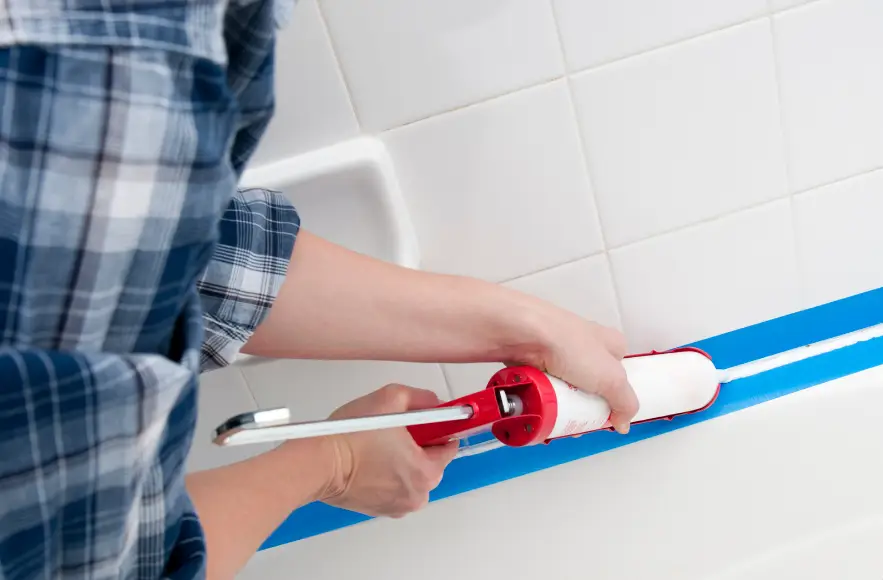
Waterproofing services in Singapore cover more than applying a coating to a damp surface.
A ceiling stain may originate from a bathroom above. A wall that becomes wet after rain may involve an external joint or façade. Water appearing below a roof can enter at one point and travel through the building before becoming visible somewhere else.
That is why the first step should be identifying where the water enters and which building element has failed.
Depending on the source, the appropriate service may involve wet-area waterproofing, roof waterproofing, water-seepage repair, PU injection, concrete repair, external-wall treatment or specialist access work.
Allstar Waterproofing & Services currently provides roof waterproofing, wet-area waterproofing, water-seepage and leakage repair, concrete repair and rope-access services in Singapore. Its published service pages state that its process begins with comprehensive inspection and diagnosis before a repair scope is proposed. Allstar also reports more than 20 years of industry experience, more than 3,000 properties served and a one-year repair warranty.
This guide explains which waterproofing service may fit different problems, how hacking and non-hacking methods differ, what affects waterproofing cost, how quotations should be compared and what HDB owners should know before repair begins.
What Waterproofing Services Are Available in Singapore?
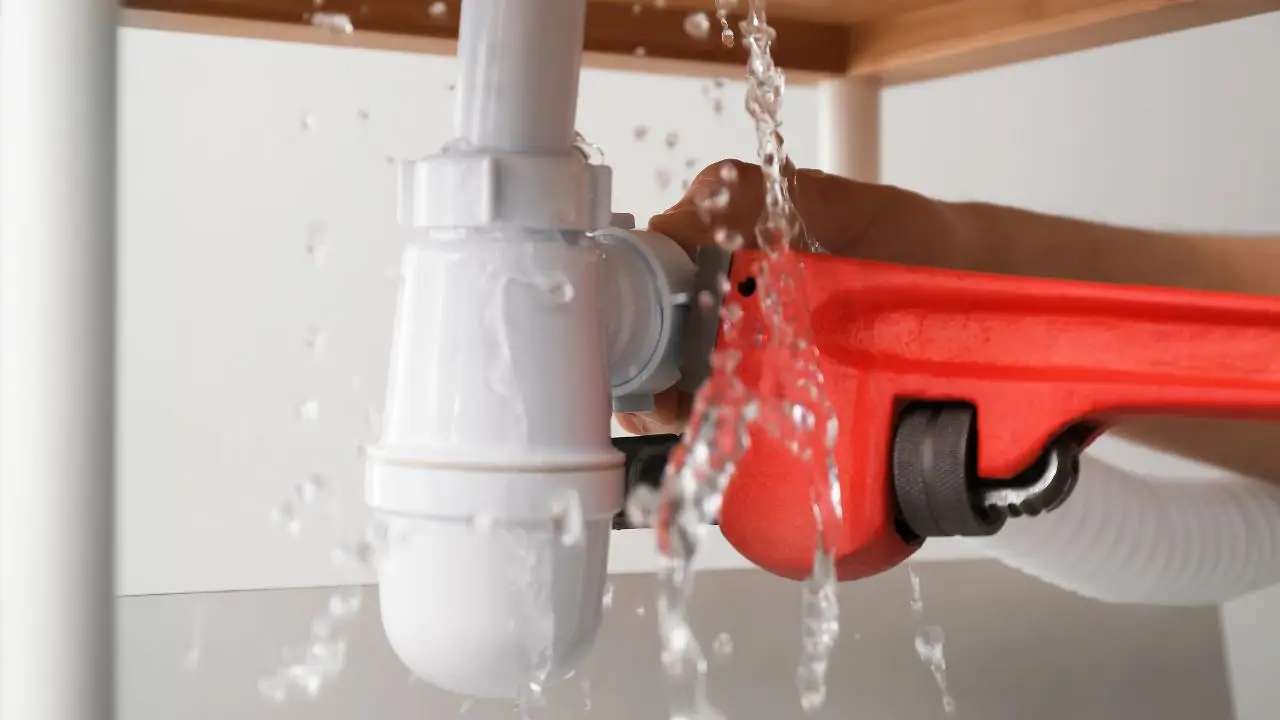
The correct waterproofing service depends on the source of the water, the affected building element and the condition beneath the visible surface.
The main categories include wet-area waterproofing, roof waterproofing, water-seepage and ceiling-leak repair, concrete-related leakage repair and external-wall or façade work.
Allstar’s current service offering includes metal, tiled and flat-concrete roof waterproofing; waterproofing for bathrooms, toilets, kitchens, balconies and swimming pools; concrete repair; leakage repair; and rope access for difficult exterior areas.
Which Waterproofing Service Do You Need?
The table below provides a starting point. It is not a diagnosis: inspection should still determine the actual service and method.
| Problem or Pattern | Area to Investigate | Possible Waterproofing Service | Possible Method |
| Ceiling dampness below a bathroom | Wet area, slab, pipe interfaces | Wet-area or leakage repair | Waterproofing, PU injection or other remedial repair |
| Ceiling leak after rain | Roof or external building envelope | Roof waterproofing / roof repair | Membrane, joint, flashing or coating repair |
| Damp external wall after storms | Façade, joints, window perimeter | External-wall waterproofing | Crack/joint sealing, coating or façade repair |
| Water through concrete crack | Concrete slab, wall or joint | Concrete/leakage repair | PU injection or suitable concrete repair |
| Balcony seepage | Membrane, drainage, wall-floor junctions | Wet-area waterproofing | Hacking or non-hacking treatment |
| Repeated bathroom leakage | Membrane, screed, joints, drains | Wet-area waterproofing | Remedial treatment or system replacement |
| Leak several storeys above ground | Exterior façade or roof | Waterproofing plus specialist access | Rope access where appropriate |
The most important word is possible.
The same symptom can have more than one cause, so a service should not be selected from the stain alone.
Is Waterproofing the Same as Water Leakage Repair?
Not exactly.
Waterproofing refers to systems or treatments designed to prevent water from penetrating a building element.
Water leakage repair addresses an existing water pathway that is already allowing moisture through.
The two frequently overlap.
If a bathroom membrane has failed, leakage repair may involve restoring the waterproofing system.
If water is travelling through an appropriate concrete crack, the repair may instead involve injection.
If the source is a damaged roof flashing or joint, repairing that component may be more important than applying a general coating.
This distinction matters because a property owner searching for “waterproofing” does not necessarily need an entirely new waterproofing system.
The inspection should first establish what failed.
Do You Need a Waterproofing Contractor or a Plumber?
That depends on the source.
A leaking water pipe, sanitary pipe or plumbing fitting may require plumbing expertise.
Water travelling through a roof, wet-area membrane, concrete slab, external wall, balcony or building joint is more likely to involve waterproofing or building repair.
The problem is that a stain does not always make the difference obvious.
For example, a ceiling leak beneath a bathroom can arise from waterproofing, plumbing or another interface in the wet area.
If the cause is uncertain, diagnosis should come before choosing the repair trade.
For HDB flats, owners are responsible for maintaining sanitary branch pipes within their flats, while Town Councils maintain the main sanitary pipes.
What Does Wet-Area Waterproofing Cover?
Wet-area waterproofing is used in spaces that experience regular water exposure.
Common areas include bathrooms, toilets, kitchens, balconies and swimming pools.
Typical weak points can include wall-floor junctions, drainage points, pipe penetrations, cracks, porous substrates and deteriorated waterproofing beneath the visible finish.
Allstar’s current wet-area service covers bathrooms, toilets, kitchens, balconies and swimming pools and includes both remedial non-hacking approaches and installation of new waterproofing systems where required.
When Might Wet-Area Waterproofing Need to Be Rebuilt?
More extensive work may be required when the existing waterproofing system has deteriorated beyond a local repair.
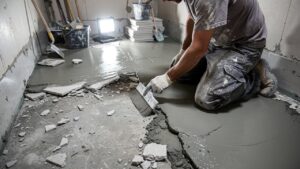
Examples include damaged screed, loose or debonded finishes, extensive membrane deterioration or other substrate problems that need to be exposed before a new system can be applied.
Allstar’s wet-area process describes stripping and preparing the affected area, priming, treating junctions, applying a waterproofing membrane and screed, and carrying out a ponding test where a new system is installed.
The important principle is that the repair should address what lies beneath the tiles when the underlying system—not merely the visible grout—has failed.
What Does Roof Waterproofing Cover?
Roof waterproofing protects against rain entering through roof surfaces and associated details.
Different roof types have different common failure points.
Metal roofs may develop problems around flashings, cappings, fasteners or corrosion.
Tiled roofs may leak through damaged tiles, ridges, valleys or flashing.
Flat reinforced-concrete roofs may develop cracking, joint deterioration or drainage-related ponding.
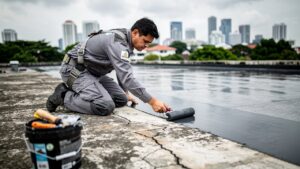
Allstar currently provides waterproofing for metal, tiled and flat-concrete roofs and lists liquid-applied and torch-applied membrane systems among its roof-waterproofing approaches.
The suitable repair should depend on the roof condition rather than simply applying the same coating to every roof.
What About External-Wall and Façade Waterproofing?
Rainwater can enter through external-wall cracks, joints, failed sealants and other façade defects.
The resulting damp patch may appear inside the property some distance from the entry point.
External repair can become more complicated when the defect is several storeys above ground.
In those situations, the waterproofing scope may need to be combined with specialist access.
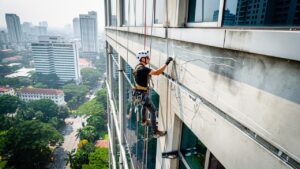
Allstar states that its rope-access service can be combined with waterproofing and is carried out by IRATA-certified technicians for difficult-access locations.
When Is Concrete Repair Part of Waterproofing?
Sometimes the waterproofing material is not the only problem.
Cracked, honeycombed or deteriorated concrete may itself form part of the water pathway.
In such cases, the concrete condition may need to be repaired before or alongside the waterproofing system.
Allstar’s current concrete service includes structural and non-structural crack repair as well as spalling-related work.
A coating applied over unstable or damaged concrete does not eliminate the need to correct defects that affect the substrate.
What Waterproofing Methods Are Commonly Used?
Different methods solve different problems.
A contractor should therefore be able to explain why a particular method suits the defect found during inspection.
Polyurethane Injection
Polyurethane injection, often called PU injection or grouting, is used for suitable water seepage involving concrete cracks, joints or honeycombed areas.
The material is injected under pressure into the leakage path. Allstar states that its polyurethane reacts on contact with water and expands to help seal pores and cracks within the concrete.
PU injection is useful when the leakage path is compatible with injection.
It is not automatically a replacement for a failed roof system, plumbing repair or widespread wet-area waterproofing failure.
Flood Infusion or Crystallisation Treatment
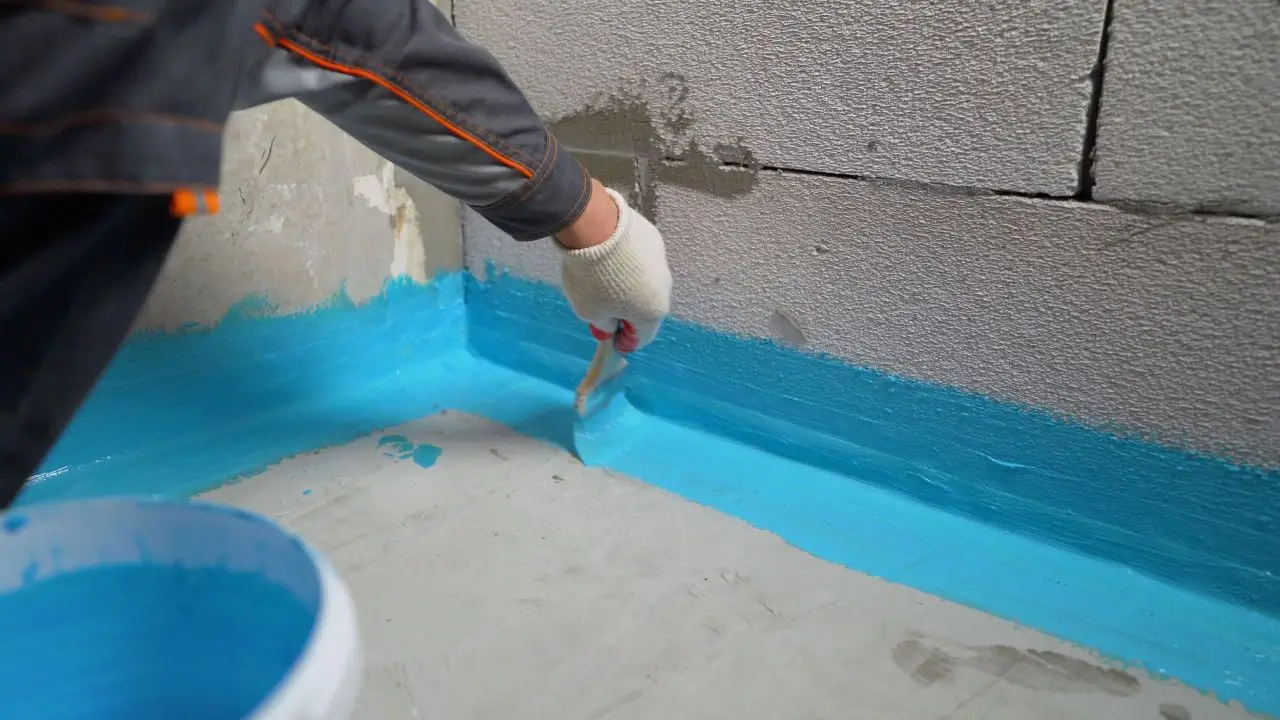
Crystallisation-based waterproofing is another treatment used in suitable concrete and wet-area situations.
Allstar describes its Flood Infusion Treatment as encouraging crystalline growth inside concrete pores and capillaries to reduce water penetration.
One advantage is that it may provide a less invasive option in appropriate cases.
However, the method still needs to match the substrate and defect.
Nano-Technology Coating
Allstar also lists nano-technology coating as a liquid-applied treatment intended to increase water repellency while allowing a suitable surface to remain breathable.
Such surface treatments should not be treated as a universal substitute for repairing failed substrate, drainage or waterproofing layers underneath.
Protective Waterproofing Coatings
Protective coatings can form part of repairs to suitable roof and external-wall surfaces.
Allstar’s leakage service describes patching and sealing cracks before applying a protective coating to existing roofs and walls.
Surface preparation remains important because the final coating can only perform as well as the substrate to which it is applied.
Liquid-Applied Roof Membranes
Liquid-applied waterproofing creates a continuous protective layer over a prepared roof surface.
Its ability to conform around details can make it useful for certain roof configurations.
The material and preparation should still be selected according to the roof type and existing system.
Torch-Applied Membranes
Torch-applied membrane systems use prefabricated modified-bituminous sheets bonded to a prepared roof substrate.
They are another possible roof-waterproofing approach rather than a universal answer for every roof.
Allstar lists both liquid-applied and torch-applied membranes among its current roof-waterproofing systems.
Should You Choose Hacking or Non-Hacking Waterproofing?
Neither approach is automatically better.
When Non-Hacking Waterproofing May Be Suitable
A less invasive treatment can be attractive because it reduces demolition, dust and reinstatement.
It may be suitable where the identified water pathway can be treated without exposing a larger failed system.
Examples may include certain concrete leakage problems treated through injection or crystallisation techniques.
Allstar currently offers Flood Infusion and nano treatments as non-hacking wet-area options and PU injection for appropriate concrete leakage.
When Hacking May Still Be Necessary
Hacking becomes more reasonable where damaged material needs to be exposed and replaced.
This can include extensive membrane failure, damaged screed, loose finishes or substrate deterioration.
The correct question is therefore not:
“Can I avoid hacking?”
It is:
“Can this particular defect be repaired properly without hacking?”
A contractor promising a no-hacking solution before inspecting the problem should be questioned.
How Does a Professional Waterproofing Process Work?
A well-managed project should generally move through four stages:
inspection → diagnosis and quotation → repair → validation and follow-up.
1. Inspection
The contractor should first understand when and where the problem occurs.
Questions may include whether the leak happens only after rain, whether it worsens after showering, what lies above the affected area and whether previous repairs have been attempted.
2. Diagnosis and Quotation
The contractor should identify the likely defect and connect the proposed waterproofing method to it.
Allstar’s current wet-area and leakage services state that straightforward cases may receive an on-site quotation, while more complex proposals may take one to three working days.
3. Repair
Preparation depends on the method.
The work may involve crack repair, cleaning, priming, hacking, injection, membrane application, coating or reinstatement.
4. Testing and Follow-Up
Where appropriate, the completed waterproofing should be assessed before the area returns to normal use.
For example, Allstar’s new wet-area waterproofing process includes a ponding test intended to check whether the completed system prevents water penetration.
The exact test depends on the repair rather than one universal procedure.
How Do You Know Which Waterproofing Service Is Suitable?
A simple rule is to start with what failed, not the treatment you would prefer.
If the defect is in a concrete crack, investigate concrete leakage repair.
If the wet-area waterproofing system has failed, investigate wet-area waterproofing.
If rain enters through a roof, investigate roof repair and waterproofing.
If the source is an external façade, investigate wall, joint or façade repair.
If the defect is a pipe, waterproofing alone will not solve it.
This approach prevents a common mistake: choosing PU injection, coating or no-hacking treatment first and then trying to fit the leak to the chosen product.
How Much Do Waterproofing Services Cost in Singapore?
There is no universal waterproofing price in Singapore because different services have fundamentally different scopes.
Bathroom waterproofing, PU injection, roof membranes, external-wall work, concrete repair and rope-access projects should not be priced as though they are the same service.
One verified published example from Allstar gives approximately S$800 to S$1,500 for waterproofing an average bathroom of around four to six square metres. This is an Allstar planning reference for bathroom waterproofing, not a general Singapore-wide waterproofing rate or a price for every bathroom leakage case.
A project requiring hacking, screed replacement, tile reinstatement, drainage corrections or other repair work can involve a substantially different scope.
Roof, façade and concrete work should likewise be priced according to the particular project rather than using the bathroom figure as a benchmark.
What Factors Affect Waterproofing Cost?
The size of the treatment area matters, but it is only one factor.
The final quotation can also depend on the underlying defect, substrate condition, waterproofing system, required preparation, hacking, reinstatement and access.
A localised concrete injection, for example, has a very different scope from stripping and rebuilding an entire wet-area waterproofing system.
High-level exterior work may require specialist access.
Roof work can involve treatment of a much larger surface.
This is why a site-specific quotation is usually more meaningful than a headline “per square metre” figure.
How Should You Compare Waterproofing Quotations?
Compare the scope before the final price.
Two contractors can quote completely different amounts because they believe different things have failed.
One may propose local injection.
Another may believe the entire waterproofing system needs replacement.
One quotation may include tile reinstatement.
Another may exclude it.
A useful comparison follows this sequence:
suspected source → service selected → repair method → treatment area → preparation → hacking → reinstatement → access → testing → warranty.
Only after those items are reasonably comparable does the final number become easy to judge.
What Should a Waterproofing Quotation Include?
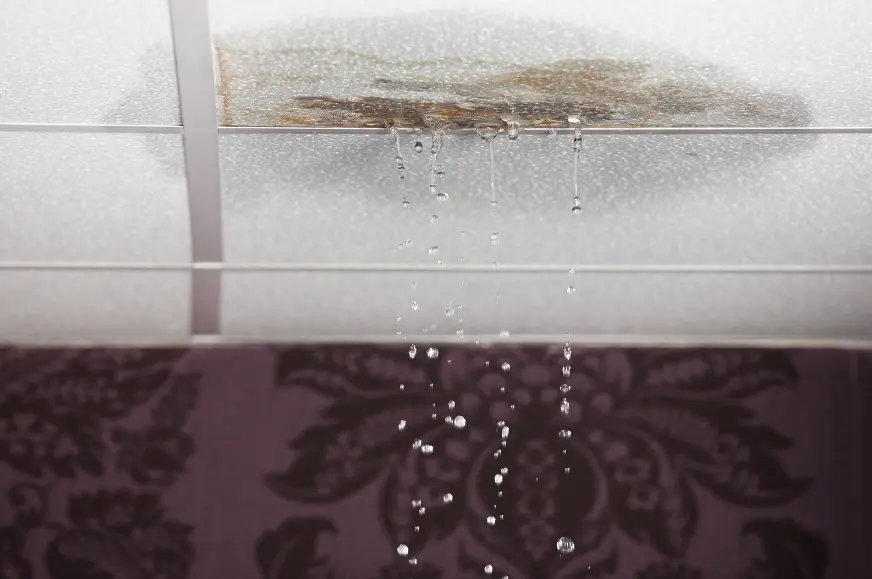
A useful quotation should identify the affected area and proposed treatment.
Preparation should be clear enough for the property owner to understand what needs to happen before the waterproofing material is applied.
If hacking is required, the quotation should explain where.
If tiles or finishes need reinstatement, confirm whether that work is included.
For high-level work, specialist access should also be addressed.
The quotation should also state the relevant warranty terms.
Allstar’s current leakage and wet-area service pages advertise no-obligation quotations, transparent pricing and a one-year repair warranty, with extended warranty options available for discussion.
What Should HDB Owners Know About Ceiling Leakage?
For HDB inter-floor ceiling leakage, responsibility should not automatically be assigned only to the upper-floor owner.
HDB states that when the shared floor and ceiling slabs require repair to resolve leakage, the affected neighbours need to arrange the work together and split the costs. If leakage originates from common property, such as the block roof, the Town Council is responsible for the repair.
HDB also recognises that different cases require different methods.
Its current ceiling-leak guidance lists re-screeding as a recommended method and also identifies other possible approaches including PU injection, Flood Infusion, overlay waterproofing membrane systems and nanotechnology waterproofing. HDB states that some ceiling leaks may require more than one method.
This reinforces an important principle:
There is no single waterproofing method that should automatically be applied to every HDB ceiling leak.
The repair should follow the confirmed source and condition.
What About Condominiums, Landed Homes and Commercial Properties?
The likely waterproofing needs change according to the property.
Condominiums
A leak may arise from another unit or common property such as an external façade or shared roof.
Where common property may be involved, owners should coordinate with the managing agent or MCST before substantial repair begins.
Landed Homes
Landed properties have direct exposure to roof, façade, balcony and drainage issues.
The source may therefore involve several external building elements that do not arise in the same way in an intermediate-floor apartment.
Commercial and Industrial Properties
Commercial projects may involve large roof areas, concrete decks, operational restrictions and difficult access.
The repair scope may therefore need to consider both waterproofing and how the work can be carried out without unnecessarily disrupting operations.
Allstar states that it works across residential, commercial and industrial properties and provides roof, wet-area, concrete, leakage and specialist-access services.
Why Do Waterproofing Repairs Sometimes Fail?
Waterproofing can fail when the wrong problem is treated.
A contractor can use a good material and still produce a poor outcome if the actual water pathway was misidentified.
Repairs may also underperform when preparation is inadequate.
Allstar’s current wet-area guidance identifies poor preparation and poor application as factors that can undermine waterproofing performance.
A repair can also be too limited for the defect.
Replacing grout is not the same as rebuilding a failed waterproofing membrane.
Likewise, hacking a large area does not guarantee success if the contractor is working in the wrong location.
The strongest result comes when diagnosis, preparation and treatment all address the same problem.
How Do You Know Whether Waterproofing Worked?
The old stain may not disappear immediately.
Concrete, plaster and other materials can remain damp while drying after the source has been repaired.
A better test is whether the original conditions still reproduce the leakage.
If water appeared only during rain, monitor the affected area after later rainfall once the repair has cured.
If leakage followed bathroom use, observe the area after normal water use resumes according to the contractor’s instructions.
For a new wet-area system, a ponding test may also form part of quality checking before normal use. Allstar includes ponding testing in its published installation process for new wet-area waterproofing systems.
Look for new moisture, rather than judging success only by the appearance of old staining.
How Can You Reduce the Risk of Future Waterproofing Failure?
Regular inspection can help identify deterioration before it becomes a major leak.
Roofs should be checked for damaged joints, cracked or loose roof components, drainage problems and deterioration of existing waterproofing.
Bathrooms and balconies should be monitored for recurring dampness, failed joints, loose finishes and water appearing outside normal wet areas.
External walls should be investigated when staining repeatedly appears after rain.
After repair, keep photographs, the quotation, invoice, scope and warranty documents.
If moisture appears again later, those records can help determine whether the original repair has failed or a different water pathway has developed.
Why Consider Allstar for Waterproofing Services?
Once the correct type of service has been identified, the contractor can be assessed against the required scope.
Allstar currently provides roof waterproofing, wet-area waterproofing, water-seepage and leakage repair, concrete repair and rope-access services. Its leakage and wet-area pages advertise free comprehensive inspections and no-obligation quotations before tailored solutions are proposed.
The company reports more than 20 years of experience and more than 3,000 properties served, and its website displays BCA and bizSAFE3 credentials. Its rope-access service states that IRATA-certified personnel carry out specialist access work.
Allstar also states that its repair work is backed by a one-year guarantee, with longer warranty arrangements available for discussion.
These are useful company-published factors to consider.
The final decision should still depend on whether the diagnosis, service, scope and method proposed for the individual property make sense.
Frequently Asked Questions About Waterproofing Services in Singapore
What Waterproofing Services Are Available in Singapore?
Common services include wet-area waterproofing, roof waterproofing, water-seepage and ceiling-leak repair, concrete leakage repair and external-wall waterproofing. Some high-level exterior projects may also require specialist access.
Which Waterproofing Service Do I Need for a Bathroom Leak?
A bathroom leak may require wet-area waterproofing, but the source should be confirmed first because plumbing, drainage and concrete interfaces can create similar symptoms. Depending on the condition, the repair may be hacking or non-hacking.
Which Service Is Used for a Ceiling Leak?
The answer depends on the source. Leakage may originate from a wet area above, a concrete defect, plumbing or—in a top-floor unit—a roof or common building element. Diagnose the water pathway before selecting the repair.
Is Water Leakage Repair the Same as Waterproofing?
No. Leakage repair addresses an existing water pathway. Waterproofing is one category of treatment used to prevent water penetration. Some leaks require waterproofing, while others may require concrete, roofing, joint or plumbing repair.
Should I Call a Plumber or Waterproofing Contractor?
Call a plumber where the source is a water or sanitary pipe. Waterproofing or building repair is more relevant when water enters through roofs, wet-area membranes, concrete, balconies, walls or joints. If the source is unclear, investigate first.
Can Waterproofing Be Done Without Hacking?
Yes, some problems can be treated with methods such as PU injection, crystallisation treatment or other non-hacking approaches. However, extensive membrane, screed or substrate failure may require hacking and replacement.
Is Non-Hacking Waterproofing Better?
Not automatically. It is less disruptive, but it is only the better option when it addresses the confirmed defect adequately.
How Much Does Waterproofing Cost in Singapore?
There is no universal rate. Allstar’s published guide gives approximately S$800–S$1,500 for waterproofing an average 4–6 m² bathroom, but this is a bathroom-specific planning reference rather than a general waterproofing price. Other work should be quoted according to the actual scope.
Why Are Waterproofing Quotations So Different?
The contractors may have diagnosed different problems or included different scopes. Compare the suspected source, service, treatment method, preparation, hacking, reinstatement, access, testing and warranty before comparing price alone.
What Should a Waterproofing Quotation Include?
A useful quotation should identify the treatment area, proposed method, important preparation, hacking where relevant, reinstatement, specialist access requirements where applicable and warranty terms.
What Waterproofing Methods Are Used for Concrete Leakage?
Depending on the defect, methods may include PU injection, crystallisation treatment or concrete repair. The appropriate method depends on the crack, joint, void or other pathway involved.
What Waterproofing Methods Are Used for Roofs?
Roof systems can include liquid-applied membranes, torch-applied membranes, protective coatings and repair to associated joints or roof details. The roof type and existing condition determine the appropriate system.
Who Pays for an HDB Ceiling Leak?
HDB states that if repair of the shared floor and ceiling slabs is needed, affected neighbouring flat owners arrange the work and split the costs. Leakage from common property, including the block roof, should be handled by the Town Council.
Does HDB Recognise Non-Hacking Ceiling-Leak Repairs?
HDB’s current guidance lists several possible methods in addition to re-screeding, including PU injection, Flood Infusion, overlay waterproofing membranes and nanotechnology waterproofing. The correct method depends on the individual case.
How Do I Know Whether Waterproofing Worked?
Monitor the affected area after the repair has cured under the conditions that previously caused leakage. For suitable wet-area installations, ponding testing may also be used before normal use resumes.
Does Allstar Provide Waterproofing Inspections?
Allstar currently advertises free comprehensive inspections covering visible and underlying problems before a tailored repair is proposed.
What Waterproofing Services Does Allstar Provide?
Its current service range includes roof waterproofing, wet-area waterproofing, water-seepage and leakage repair, concrete repair and rope-access work.
Does Allstar Provide a Warranty?
Allstar states that its repair work carries a one-year guarantee, with extended warranty arrangements available for discussion. Project-specific coverage should be confirmed in writing.
Conclusion
Waterproofing services in Singapore are most effective when the service is selected according to the actual water pathway.
A bathroom leak, roof defect, external-wall problem and concrete crack can create similar stains inside a property but require different work.
The practical sequence is therefore:
identify the symptom → diagnose the source → select the appropriate waterproofing service → choose the repair method → confirm preparation and scope → carry out the work → validate the result.
Wet-area waterproofing is appropriate when the wet-area system is the problem.
Roof waterproofing should address roof defects.
Concrete leakage may require injection or repair.
High exterior areas may need both waterproofing and specialist access.
And a plumbing leak should not be treated as though it were simply a waterproofing failure.
Allstar Waterproofing & Services provides several of these service categories, including roof and wet-area waterproofing, leakage repair, concrete repair and rope access, supported by an inspection-first process and a stated one-year repair guarantee.
For property owners, the most useful question is not:
“Which waterproofing product should I buy?”
It is:
“Which part of the building has failed, and which service will repair that specific failure?”
Once that is clear, methods, quotations and contractor comparisons become much easier to evaluate.