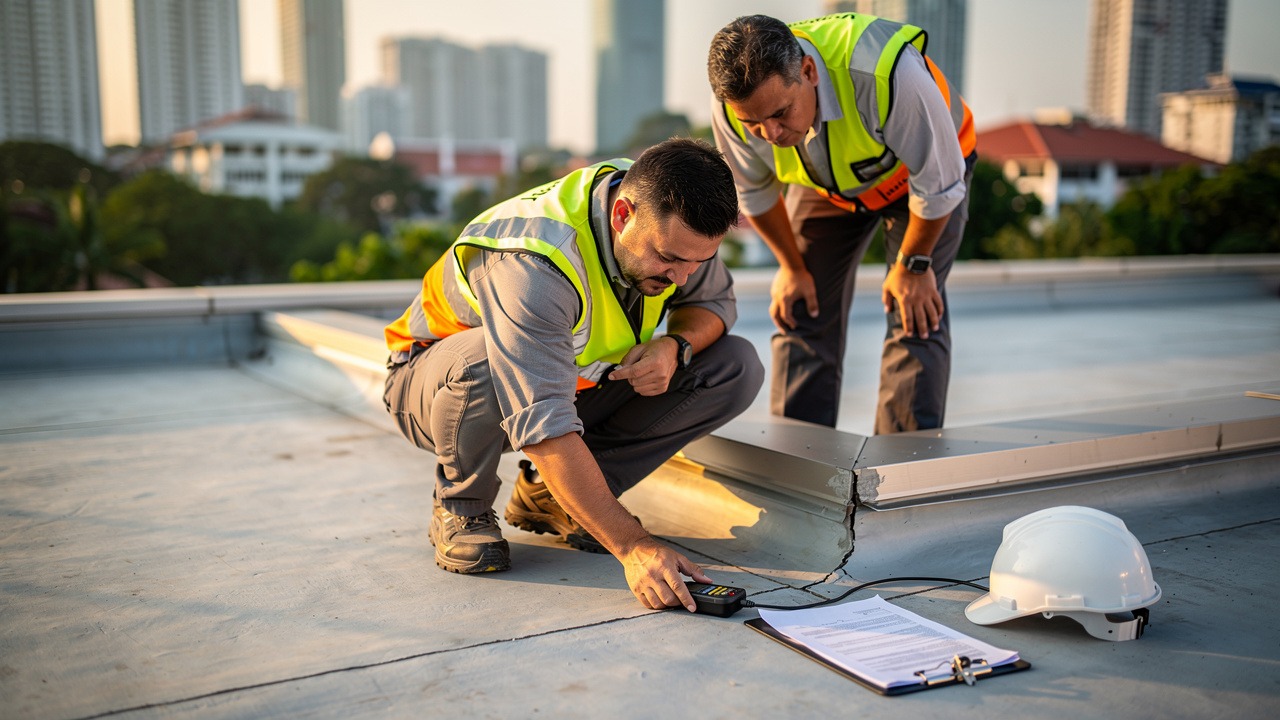
A ceiling stain that returns after heavy rain is rarely a problem that repainting alone can solve.
Water may be entering through damaged flashing, deteriorated roof joints, cracked concrete, broken tiles, failed waterproofing or another weak point before travelling through the building and appearing somewhere else indoors.
That is why effective roof waterproofing in Singapore should begin by finding the likely entry point rather than simply covering the place where the water finally becomes visible.
Singapore’s combination of frequent rain, strong solar exposure, humidity and repeated heating and cooling places exposed roofs under continuous stress. Metal roofing expands and contracts, sealants age, tiles can crack, concrete develops defects and blocked drainage can leave water sitting around vulnerable areas.
Allstar Waterproofing & Services currently provides waterproofing and leakage repair for flat concrete, pitched, tiled and metal roofs across residential, commercial and industrial properties. Its published roof systems include liquid-applied membranes, torch-applied modified-bituminous membranes, solar-reflective coatings and targeted repairs to roof details such as flashing, capping, joints, ridges, gutters and fasteners.
For property owners, the most useful question is therefore not simply:
“Which waterproofing product is strongest?”
It is:
“Where is the water entering, and which repair or waterproofing system is appropriate for this roof?”
Quick Answer: What Is the Best Roof Waterproofing Method in Singapore?
There is no single roof waterproofing system that is best for every Singapore property.
The right method depends on the roof material, existing condition, source of water ingress, amount of movement, drainage, access and whether the problem is isolated or widespread.
Liquid-applied waterproofing membranes can be useful where a continuous coating needs to conform around joints, corners and complex roof details.
Torch-applied modified-bituminous membranes can provide a robust prefabricated sheet system on suitable prepared roof surfaces.
Metal and tiled roofs may instead require targeted repair to flashing, ridges, fasteners, capping or damaged tiles before wider waterproofing is considered.
The most reliable decision therefore begins with inspection and surface preparation rather than choosing a membrane before the roof has been assessed. Allstar currently lists both liquid-applied and torch-applied membranes among its roof-waterproofing systems and states that its process begins with a free comprehensive inspection.
Why Is Roof Waterproofing Important in Singapore?
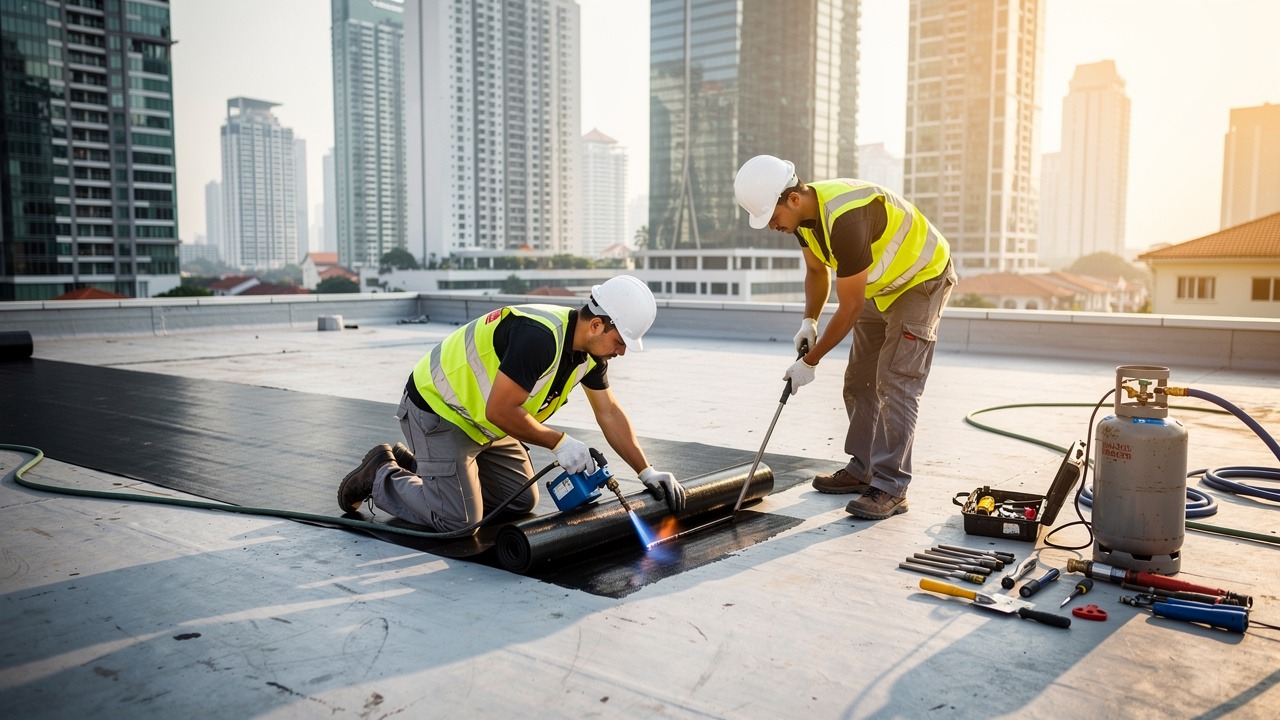
Roof waterproofing creates a protective barrier intended to resist rainwater entering through roof surfaces and adjoining details.
This is particularly important in Singapore because roofs repeatedly experience wetting, drying and strong solar heating.
Metal panels and roof details can move as temperatures change. Sealants and joints can age. Concrete surfaces can crack. Gutters and drainage points can become obstructed.
Small defects may initially allow only limited water ingress, but repeated exposure can gradually make the problem more noticeable.
Water also does not always appear directly below the point where it entered.
It can travel along concrete, beams, joints or other building elements before finally showing up as a stain, damp patch or drip inside the property.
This is why the location of the visible ceiling stain should be treated as a symptom rather than automatically assumed to be the exact roof-entry point.
What Are the Common Causes of Roof Leaks in Singapore?
Different roof types tend to fail in different ways.
A metal roof may leak around flashing or fasteners.
A tiled roof may have broken tiles or deteriorated ridge details.
A flat concrete roof may have cracking, failed joints or drainage-related ponding.
The repair should therefore begin with the roof construction rather than assuming every leak has the same cause.
What Causes Metal Roofs to Leak?
Metal roofs commonly develop leakage around flashing, capping, joints, penetrations, fasteners and gutters.
Repeated thermal movement can gradually affect these details.
Fasteners may loosen or move, while protective finishes can deteriorate and allow corrosion to develop.
Drainage is another important factor.
Leaves and debris can obstruct gutters, leaving water around already vulnerable joints for longer periods.
A metal-roof leak therefore does not automatically mean the entire roof needs a new waterproofing coating.
If the underlying roof remains serviceable, repairing failed flashing, fasteners or joints may be more appropriate than coating every square metre.
What Causes Tiled Roofs to Leak?
Pitched and tiled roofs can develop leaks through cracked or broken tiles, deteriorated ridge details, failed flashing, valleys and blocked gutters.
Replacing one visibly damaged tile may solve an isolated problem, but it should not automatically be assumed to be the only defect.
Water can enter through surrounding roof details and travel before appearing inside.
This is particularly relevant for landed properties with larger roofs containing multiple slopes, ridges, valleys and connecting sections.
The inspection should therefore look at the broader roof assembly rather than only the most obvious damaged tile.
What Causes Flat Concrete Roofs to Leak?
Flat concrete roofs can develop hairline cracks, deteriorated joints, damaged coatings and drainage problems.
Cracking may result from ageing, thermal movement, settlement or other movement within the structure.
Ponding water can make existing defects more significant because vulnerable areas remain exposed to moisture for longer periods.
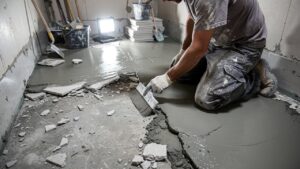
Before applying a new membrane, cracks, loose material and other substrate defects may therefore need to be repaired.
Allstar’s current technical guidance similarly states that protective coatings and liquid membranes should be applied to suitable prepared surfaces and that underlying defects should be dealt with rather than simply covered.
What Are the Signs That Roof Waterproofing May Be Failing?
A recurring ceiling stain after rain is one of the most obvious warning signs.
Other symptoms can include damp patches, peeling paint, bubbling plaster, mould, visible dripping or water appearing around upper walls and ceilings.
On the roof itself, warning signs may include cracked tiles, deteriorated flashing, loose fasteners, hairline concrete cracks, damaged joints or water that remains ponded after rainfall.
The timing of the problem also matters.
If staining consistently appears after prolonged rain, external water ingress becomes more likely.
If the area becomes wet regardless of rainfall, another source such as plumbing or an adjoining wet area may also need investigation.
A roof-waterproofing diagnosis should therefore consider both the roof condition and the pattern of the indoor symptom.
How Does Allstar Inspect a Roof Leak?
Allstar currently states that its roof service begins with a free consultation followed by an on-site inspection intended to identify both visible and underlying issues.
Straightforward cases may receive an on-the-spot quotation, while more complicated proposals may take approximately one to three working days to prepare.
This inspection matters because several different defects can create similar ceiling stains.
A contractor may need to consider the roof material, cracks, joints, waterproofing condition, flashing, drainage and access before deciding what work is required.
The inspection also establishes how much surface preparation will be necessary.
That can significantly affect both the waterproofing method and final project cost.
What Roof Waterproofing Methods Does Allstar Use?
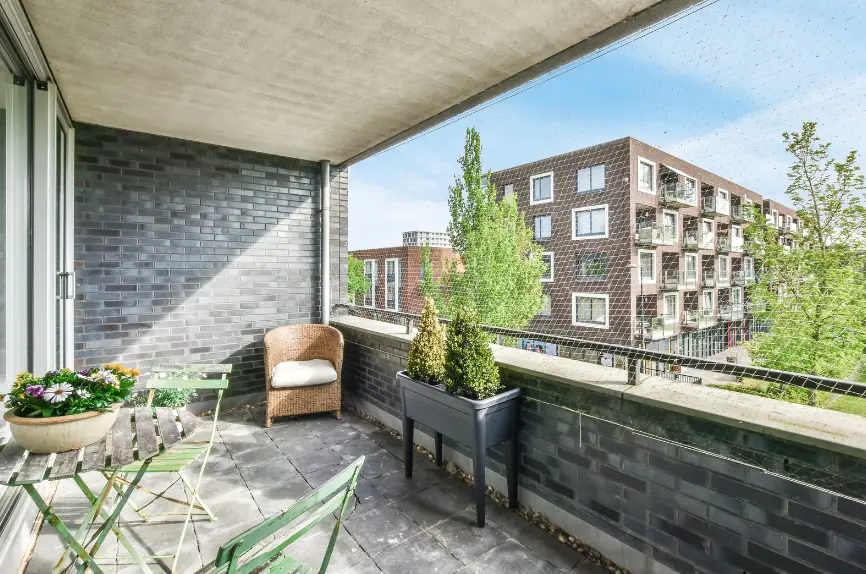
Allstar currently lists liquid-applied waterproofing membranes, torch-applied modified-bituminous membranes and solar-reflective thermal-insulation coatings among its roof systems. It also provides targeted roof repairs where local defects rather than widespread membrane failure are responsible for the leakage.
The appropriate method should depend on the roof rather than applying one product universally.
What Is a Liquid-Applied Waterproofing Membrane?
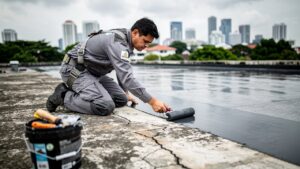
A liquid-applied waterproofing membrane is installed onto a prepared surface and cures into a continuous protective layer.
Allstar currently lists acrylic-based, polyurethane-based and hybrid formulations among the liquid systems used for roof waterproofing.
A practical advantage of liquid systems is their ability to conform around roof details, corners, joints and irregular geometry.
Because the membrane forms from a liquid coating, there are fewer prefabricated sheet seams to accommodate around complex shapes.
However, the finished system depends heavily on preparation.
Applying membrane over dirt, loose material, trapped moisture or untreated cracks can compromise the result.
The underlying surface therefore needs to be stable and appropriately prepared before coating.
What Is a Torch-Applied Waterproofing Membrane?
Torch-applied waterproofing uses prefabricated modified-bituminous membrane sheets that are bonded to a prepared roof substrate using heat.
Allstar currently lists APP modified-bituminous membrane as one of its roof-waterproofing systems.
The membrane creates a continuous sheet barrier once adjoining sections and seams are properly bonded.
This can make it suitable for certain flat-roof applications.
Installation quality is particularly important because joints, laps and adjoining details need to be properly formed.
The use of heat also means site conditions and safety precautions need to be considered.
Torch-applied membrane is therefore an option for suitable roofs, not an automatic upgrade over every liquid system.
Liquid Waterproofing vs Torch-On Membrane: Which Is Better?
Neither is universally better.
Liquid-applied waterproofing can be particularly useful where the roof contains irregular geometry, complex detailing or multiple transitions because the material conforms to the prepared surface and forms a continuous coating.
Torch-applied membrane provides a prefabricated sheet system that can be robust on suitable flat-roof substrates where heat application and proper seam formation are practical.
Allstar currently offers both systems and its recent technical guidance similarly states that the choice should depend on roof type, substrate condition, detailing and access rather than assuming one method is correct for every property.
For owners comparing quotations, the more useful question is not:
“Which membrane is more expensive?”
It is:
“Why is this membrane appropriate for my roof?”
The contractor should be able to explain that connection clearly.
What Is a Solar-Reflective Roof Coating?
Allstar also provides solar-reflective thermal-insulation coating as part of its roof solutions.
The coating is intended to reflect a portion of solar radiation and reduce the amount of heat absorbed by suitable roof and wall surfaces. Allstar positions it as a “cool roof” solution for landed houses, residential properties, factories and commercial buildings.
A reflective coating can be useful where solar reflectivity is one of the project objectives.
However, it should not be treated as a substitute for repairing significant roof defects.
If cracks, failed joints, damaged flashing or loose material are present, those problems still need to be addressed before the coating can perform on a sound substrate.
Is PU Injection the Same as Roof Waterproofing?
No.
Polyurethane injection and surface waterproofing address different types of water pathways.
PU injection involves introducing material into suitable cracks, joints or internal leakage pathways.
Surface waterproofing instead creates a protective system over the roof surface.
Allstar provides concrete repair and leakage-repair services in addition to roof waterproofing, which means the recommended method can differ according to the actual defect.
An isolated crack may require targeted repair.
A deteriorated roof membrane may require surface waterproofing.
Applying the wrong method simply because it is familiar does not solve the underlying problem.
Can Roof Waterproofing Be Done Without Hacking?
Sometimes.
Certain roof repairs and surface-applied waterproofing systems can be completed without major hacking when the existing substrate is sufficiently sound.
For example, a suitable prepared surface may receive a liquid-applied membrane or protective coating without removing large sections of concrete.
However, “no hacking” should not become the main objective if the material underneath is loose, unstable or badly deteriorated.
Failed coatings may need removal.
Cracks may need repair.
Damaged roof details may need to be opened or replaced.
Allstar’s current waterproofing guidance similarly notes that where hacking is required, the quotation should identify what will be removed and whether reinstatement is included.
The better question is therefore:
“How much preparation does this roof actually require?”
A non-hacking solution is useful only when it still addresses the defect properly.
Roof Repair or Full Waterproofing: Which Do You Need?
A local repair can be appropriate when the defect is isolated and the wider roof system remains serviceable.
Examples may include one failed flashing detail, several loose fasteners, isolated damaged tiles, a ridge defect or a localised joint problem.
A wider waterproofing replacement becomes more relevant when deterioration affects larger areas, the existing membrane has reached the end of its useful service life or repeated patch repairs continue to fail.
The history of the roof matters as well.
If the same area has been patched several times and water continues entering from different points, another local patch may offer diminishing value.
Allstar currently provides both targeted roof repair and larger waterproofing systems, allowing the recommended scope to vary with the inspection findings.
How Long Does Roof Waterproofing Take?
There is no single project duration for every roof.
The timeline depends on the size of the roof, access, existing damage, preparation, membrane system, curing requirements, weather and whether additional repair or reinstatement is required.
Small localised repairs may be completed relatively quickly.
More extensive membrane replacement can require substantially longer.
Allstar’s current roof process states that repair and waterproofing completion can range from weeks to months depending on project demands, scale and complexity.
This broad range is more realistic than promising every roof can be waterproofed within the same number of days.
Owners should ask for a project-specific programme showing preparation, application, curing and any reinstatement work.
Can Roof Waterproofing Be Done During Rainy Weather?
Waterproofing generally requires suitable application conditions.
Many membranes and coatings need an adequately prepared and dry substrate, while curing can also be affected by rain.
Singapore’s weather therefore needs to be considered when scheduling external work.
This does not mean roof waterproofing can only be carried out during long dry seasons.
It means the contractor should plan the sequence around the requirements of the selected material and current site conditions.
Owners should ask what happens if rainfall interrupts preparation, application or curing.
How Much Does Roof Waterproofing Cost in Singapore?
There is no single reliable project price because roof size is only one cost factor.
Allstar’s June 2026 roof-waterproofing guide publishes a broad starting reference of approximately S$5 to S$20 per square metre for basic systems, while also explaining that roof size, access, existing damage, repair requirements and membrane quality can materially change the quotation.
This should be treated as an Allstar-published planning reference rather than a guaranteed Singapore-wide rate.
A smaller roof with difficult access and extensive preparation may cost more than expected.
A larger but uncomplicated roof may have a very different cost structure.
The most useful quotation should therefore identify the work behind the final price.
It should explain preparation, repairs, membrane system, access, reinstatement where applicable and warranty coverage.
Why Can Two Roof Waterproofing Quotes Be Very Different?
Two contractors may not be pricing the same diagnosis.
One quotation may include only a surface coating.
Another may include crack repair, removal of deteriorated material, primer, membrane application, flashing work, access and reinstatement.
Even the membrane systems may be different.
Price comparison becomes meaningful only after the scopes are reasonably comparable.
Owners should therefore ask what each contractor believes has failed, why that diagnosis was reached and how the proposed method addresses it.
Allstar’s current specialist guidance similarly recommends comparing diagnosis, method, preparation, access and warranty before treating the final price as the deciding factor.
How Long Does Roof Waterproofing Last?
Waterproofing lifespan varies according to the material, roof exposure, workmanship, substrate condition, drainage and maintenance.
Allstar’s current published guide gives broad lifespan ranges extending from approximately five years for some systems to considerably longer for certain synthetic membranes when properly installed and maintained.
These should be treated as indicative planning ranges rather than guarantees.
A roof with persistent ponding, substantial movement, heavy foot traffic or unresolved defects may deteriorate more quickly.
Likewise, even a durable membrane can be damaged by later works carried out on the roof.
The written product and workmanship terms for the actual project are more useful than relying on a generic lifespan figure.
What Warranty Does Allstar Provide?
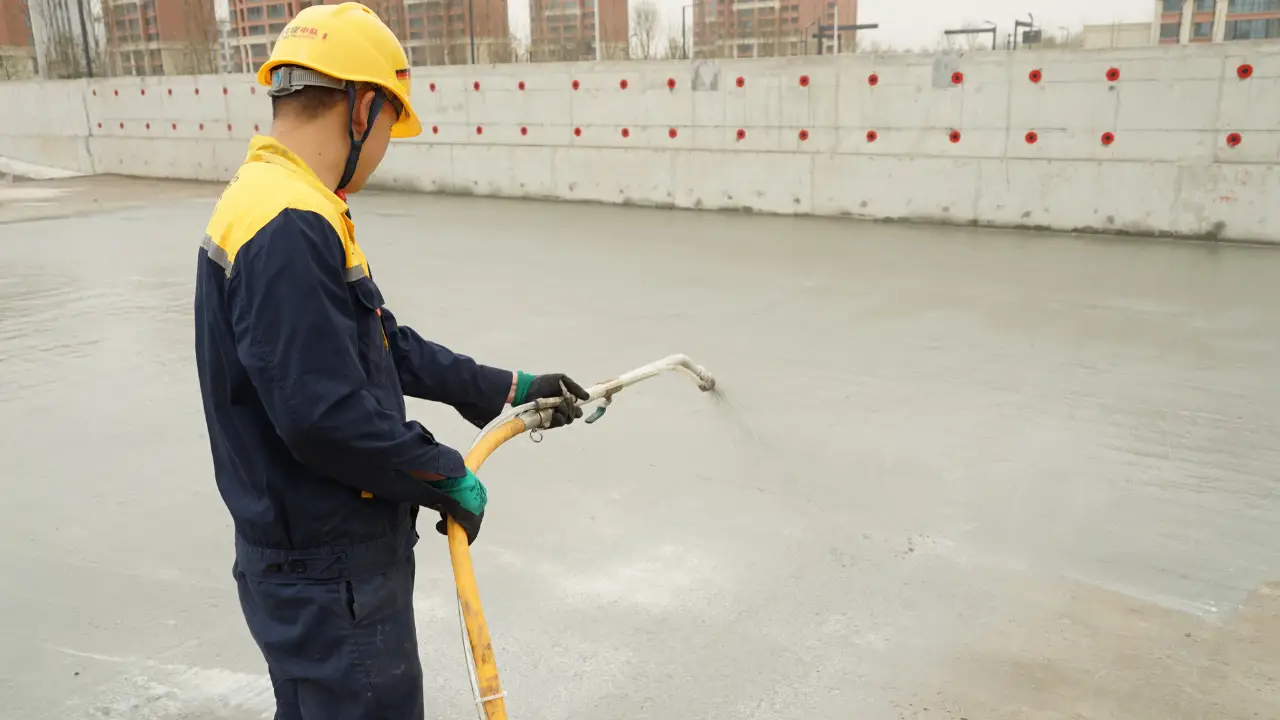
Allstar’s current roof-waterproofing page states that its repair work is backed by a one-year warranty, with extended warranty options available for discussion depending on the project.
That does not mean every roof automatically receives identical coverage.
The property owner should confirm the specific terms in writing.
The quotation or warranty documentation should identify the covered repair area, duration and any relevant conditions.
Photographs, quotations, invoices and warranty documents should also be retained after completion.
What Should You Do After Roof Waterproofing?
The original leak area should be monitored under the conditions that previously caused the problem.
If the leak appeared only after heavy rain, inspect the ceiling and surrounding areas following later rainfall once the waterproofing system has fully cured.
Watch for renewed staining, bubbling paint, dampness or moisture appearing nearby.
Roof drainage should also remain clear.
Blocked gutters and outlets can expose waterproofing to unnecessary ponding.
Owners should be careful when later air-conditioning, electrical, solar or other contractors work on the roof because drilling, fastening or dragging equipment across a membrane can create new damage.
Allstar’s current leakage guidance similarly recommends monitoring repaired areas and retaining photographs, quotations, invoices, scope and warranty documentation for future reference.
How Often Should a Waterproofed Roof Be Inspected?
There is no universal statutory inspection schedule that applies to every private roof solely because waterproofing has been installed.
The appropriate frequency depends on roof type, age, access, exposure and maintenance needs.
Owners should nevertheless carry out periodic visual checks and investigate changes rather than waiting for interior damage to appear.
Useful points to watch include gutters, ponding, damaged tiles, loose metal details, new cracking and physical damage to the membrane.
Additional inspection can also be sensible after major storms or after contractors have carried out work on the roof.
How Do You Choose a Roof Waterproofing Contractor in Singapore?
Begin with the diagnosis rather than the sales claim.
A contractor should be able to explain what they believe has failed and why the proposed method is appropriate.
The quotation should identify surface preparation, repair scope, membrane type, access requirements and warranty.
Relevant credentials also provide context.
Allstar’s current roof service page displays BCA and bizSAFE3 credentials and states membership with the Singapore Contractors Association. The company also reports more than 20 years of industry experience and more than 3,000 residential, commercial and industrial properties served. These are Allstar’s current company-published credentials and figures.
Credentials alone, however, do not prove that a particular membrane is right for a particular leak.
They should support a clear technical diagnosis rather than replace one.
Why Consider Allstar Waterproofing & Services?
Allstar’s strongest practical distinction is the breadth of repair methods it can consider after inspection.
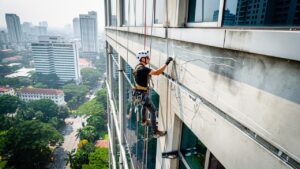
Its current services include roof waterproofing, roof repair, wet-area waterproofing, water-seepage and leakage repair, concrete repair and rope-access work.
That breadth matters because the first visible symptom does not always identify the correct service.
A ceiling stain may originate from a roof membrane, failed flashing, a crack, external water ingress or another route.
Allstar’s published process begins with a free comprehensive inspection before a tailored repair is proposed. The company reports more than 20 years of industry experience, more than 3,000 properties served and a one-year repair warranty, with extended coverage available for discussion.
For property owners dealing with recurring leaks, the useful value is therefore not simply access to another waterproofing product.
It is the ability to connect the suspected defect with an appropriate repair method.
Frequently Asked Questions About Roof Waterproofing in Singapore
What Is the Best Roof Waterproofing Method in Singapore?
There is no universal best method. Liquid membranes, torch-applied membranes and targeted repairs suit different roofs and defects. The correct method depends on roof type, surface condition, detailing, movement and the source of water ingress.
Liquid Waterproofing or Torch-On Membrane: Which Is Better?
Liquid-applied systems can conform well around complex details and form a continuous coating, while torch-applied membrane provides a prefabricated modified-bituminous sheet system for suitable prepared roofs. Neither is automatically better for every property.
How Much Does Roof Waterproofing Cost in Singapore?
Allstar’s June 2026 guide publishes a broad starting reference of approximately S$5 to S$20 per square metre for basic systems. Final cost can vary considerably according to roof size, access, damage, preparation and material choice.
How Long Does Roof Waterproofing Take?
The duration depends on the scale and complexity of the project. Allstar states that its roof repair and waterproofing projects can range from weeks to months depending on project demands, while smaller local repairs may require substantially less work.
Can Roof Waterproofing Be Done Without Hacking?
Sometimes. Surface-applied membranes and local repairs may avoid major hacking where the existing substrate remains suitable. However, loose material, deteriorated waterproofing, cracks or damaged roof details may still require removal and preparation.
How Do I Know Whether I Need Roof Repair or Full Re-Waterproofing?
Local repair may be suitable when the defect is isolated and the wider roof remains serviceable. Full waterproofing becomes more relevant when deterioration is widespread, the membrane is extensively aged or repeated patch repairs continue to fail.
How Long Does Roof Waterproofing Last?
Lifespan depends on membrane type, exposure, workmanship, substrate condition and maintenance. Generic lifespan estimates should therefore be treated as planning references rather than guarantees for an individual property.
Does Allstar Provide a Warranty?
Yes. Allstar’s current roof page states that repair work is backed by a one-year warranty, with extended options available for discussion depending on the project.
What Types of Roofs Does Allstar Work On?
Allstar currently provides waterproofing and repair for metal, tiled and flat-concrete roof systems and lists liquid-applied, torch-applied and protective roof-coating systems among its approaches.
What Should I Check After Waterproofing Is Completed?
Monitor the original leak area after the repair has cured, especially under the rainfall conditions that previously triggered the problem. Keep drainage clear, watch for new staining or damage and retain the project scope, photographs, invoice and warranty documents.
Final Thoughts: How Should You Approach Roof Waterproofing in Singapore?
Roof waterproofing should begin with understanding why water is entering the building rather than selecting a membrane before the roof has been inspected.
Metal roofs can fail around flashing, fasteners, capping and corrosion.
Tiled roofs can develop cracked tiles, deteriorated ridges and leaking valleys.
Flat concrete roofs can develop cracks, failed joints and drainage-related ponding.
Those problems do not all require the same solution.
Some roofs need only targeted repair.
Others need surface preparation and a new liquid membrane.
A suitable flat roof may benefit from a torch-applied system.
Another property may require crack repair before waterproofing can begin.
That is why diagnosis and preparation matter as much as material selection.
Allstar Waterproofing & Services currently provides liquid-applied roof membranes, torch-applied modified-bituminous membranes, solar-reflective coatings and targeted roof repairs, with its process beginning with a free comprehensive inspection before a tailored quotation is proposed.
For homeowners, facility managers and commercial property owners, the most useful quotation is therefore not simply the cheapest number.
It is the proposal that clearly explains:
what has failed, why the contractor believes it has failed and how the proposed work addresses that defect.
Once the repair is completed, the job does not end with a freshly coated roof.
Keep drainage clear.
Monitor the original leak area.
Protect the waterproofing from later roof works.
Keep the warranty documents.
When diagnosis, preparation, material selection, workmanship and maintenance are treated as one complete process, roof waterproofing becomes more than a temporary response to the next storm.
It becomes part of protecting the building beneath it for the longer term.