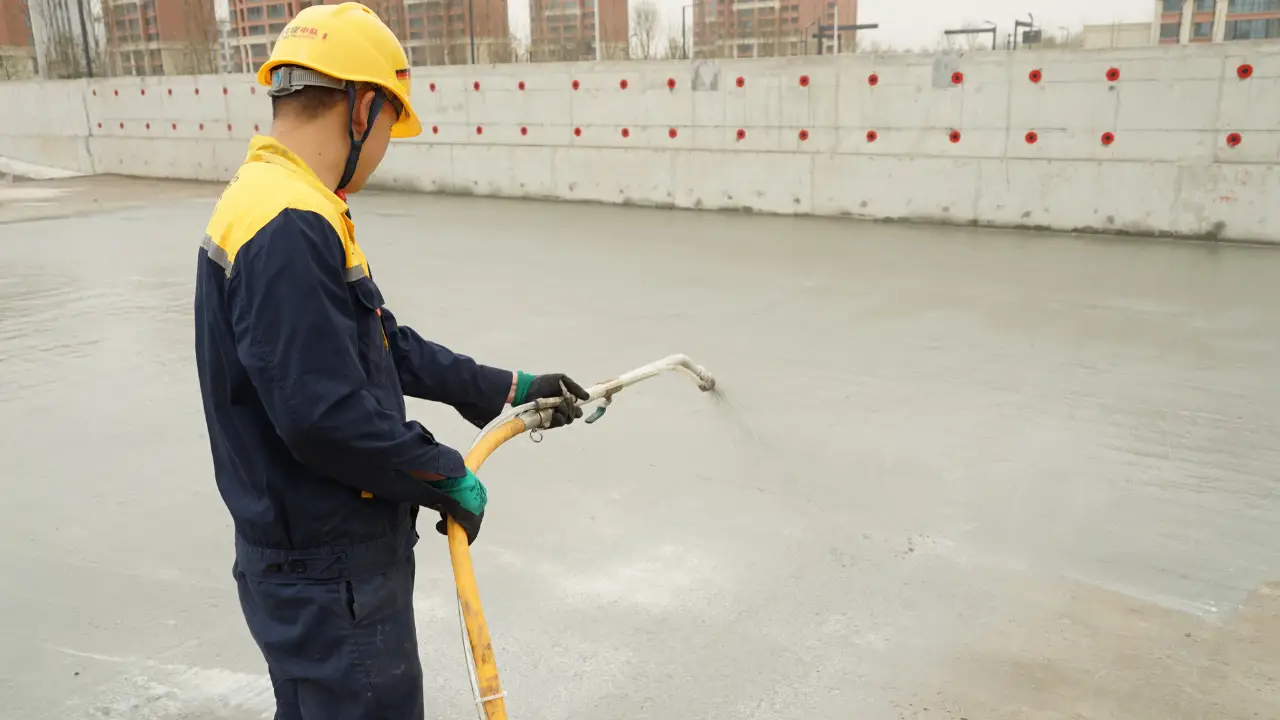
Recurring water stains are rarely just a cosmetic problem. When a ceiling patch keeps returning, paint begins bubbling or a wall stays damp after repainting, water is usually still entering the building somewhere.
The visible damage may not reveal the source. Moisture can travel through concrete slabs, joints, cracks, roof surfaces, pipes, wet-area screed and concealed cavities before appearing several metres away.
For this reason, effective water leakage repair in Singapore should begin with diagnosis rather than immediate hacking, injection or sealing. Depending on the source, the appropriate repair may involve PU injection, wet-area waterproofing, roof repair, joint or crack treatment, waterproof coatings, plumbing work or more extensive hacking and reinstatement.
Allstar Waterproofing & Services provides leakage and seepage repair for residential, commercial and industrial properties in Singapore. Its current service scope includes ceiling and wall leakage repair, wet-area waterproofing, roof repair and waterproofing, concrete repair and difficult-access exterior work. The company states that it starts with a comprehensive site inspection before proposing a repair method and quotation.
This guide explains how leakage is diagnosed, which repair methods are used for different problems, when hacking may or may not be necessary, what affects repair cost, what HDB owners should know about ceiling seepage and how to compare contractors before approving the work.
What Causes Water Leakage in Singapore Properties?
Water leakage usually begins when water finds a weakness in a part of the building that is supposed to keep moisture out or direct it safely away.
Failed waterproofing membranes, concrete cracks, defective roof components, deteriorated joints or sealants, drainage problems and plumbing-related faults can all create water pathways.
Singapore’s regular rainfall and humid climate mean that roofs, balconies, external walls, bathrooms, toilets and kitchens are repeatedly exposed to moisture. A defect that remains unnoticed during dry conditions can become obvious once rain or repeated wet-area use sends enough water through it.
Allstar’s current leakage service covers ceiling, wall and roof seepage as well as methods intended for concrete and wet-area defects.
The important point is that similar-looking stains can have completely different causes.
A ceiling mark appearing after heavy rain may involve a roof or external wall.
A similar stain below a bathroom could instead involve waterproofing, drainage, plumbing or the concrete slab.
The repair should follow the confirmed defect rather than the appearance of the stain alone.
Why Does Water Leakage Keep Returning After Repainting?
Repainting treats the damaged finish. It does not stop water from entering the building.
When moisture remains behind the surface, a fresh coat of paint may temporarily hide discolouration. Over time, the new finish can stain, blister, peel or develop mould again.
The same problem occurs when the first visible crack is sealed without confirming that it is the actual point of water entry.
Water can follow joints, concrete interfaces, pipes and other concealed routes before emerging somewhere else.
That means the visible stain or crack may be an exit point rather than the source.
A lasting repair therefore needs to interrupt the water pathway, not simply improve the appearance of the affected area.
Is Water Leakage Repair the Same as Waterproofing?
Not exactly.
Water leakage repair addresses an existing defect that is allowing water to enter or escape.
Waterproofing describes the systems and treatments used to prevent water from penetrating particular building elements.
The two often overlap.
If a bathroom waterproofing membrane has failed, repairing the leakage may require restoring or replacing that waterproofing system.
If water is moving through a suitable concrete crack, the repair may instead involve PU injection.
A leaking metal roof may require repair to joints, flashings or damaged roofing rather than simply applying a general waterproof coating indoors.
A plumbing leak requires attention to the pipe or fitting itself.
This distinction matters when comparing quotations because two contractors may be proposing very different solutions even though both call the work “water leakage repair.”
Should You Call a Plumber or a Waterproofing Contractor?
It depends on the suspected source.
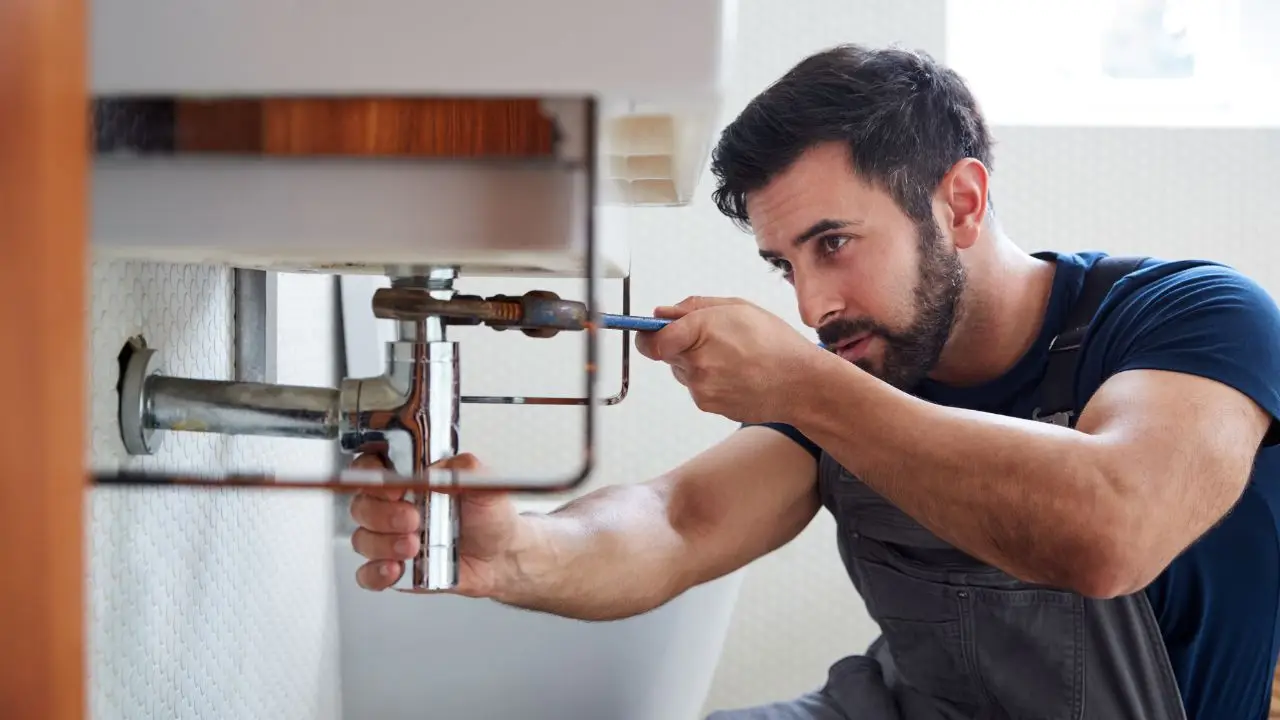
A pressurised water-pipe leak, leaking sanitary pipe or defective plumbing fitting may require a plumber.
Leakage through a bathroom waterproofing system, concrete slab, roof, façade, external joint or other building-envelope component is more likely to require waterproofing or building-repair expertise.
For HDB flats, HDB states that flat owners are responsible for maintaining sanitary branch pipes within their flats, while Town Councils maintain the main sanitary pipes. HDB also advises engaging a licensed plumber for repairs where necessary.
The difficulty is that a ceiling stain alone may not tell you whether the source is plumbing or waterproofing.
If the cause is unclear, diagnosis should come before choosing the trade.
What Warning Signs Suggest You Need Water Leakage Repair?

A brown or yellow water stain is the most obvious clue, but leakage can appear in other ways.
Peeling or bubbling paint may indicate moisture behind the coating. Persistent musty odours can suggest dampness in concealed areas. Mould, warped finishes, damp flooring, discolouration and unexplained dripping sounds are other warning signs listed in Allstar’s current leakage guidance.
The timing of the problem can provide useful clues.
If staining appears mainly after thunderstorms, a contractor may investigate the roof, façade, external joints, windows or other rain-exposed areas.
If moisture worsens after showering, the bathroom or another nearby wet area becomes more relevant.
If dampness persists even through dry weather, an internal source such as plumbing may require investigation.
These patterns help narrow the possibilities. They do not replace professional diagnosis.
If active water is affecting lights, sockets, switches or other electrical equipment, avoid touching wet fittings and obtain appropriate professional assistance.
How Do Contractors Identify the Source of Water Leakage?
A professional investigation should begin with the history of the problem.
The contractor may ask when the leak first appeared, whether it changes with rainfall or water use, what rooms or building elements are located above the affected area and whether there have been previous waterproofing, renovation or repair works.
The visible damage is then inspected together with the most likely water routes.
For more complicated concealed problems, Allstar’s published specialist guidance states that tools such as thermal imaging, acoustic detection and moisture-measuring equipment may be used where appropriate to support leak investigation.
These tools should support the contractor’s assessment rather than replace it.
A useful diagnosis should answer three questions:
What is the suspected defect?
What evidence points to that defect?
Why will the proposed repair interrupt the water pathway?
If those questions cannot be explained clearly, it is difficult for a property owner to judge whether the repair method is appropriate.
Allstar currently advertises free comprehensive inspections and states that straightforward cases may receive an on-site quotation, while more complicated proposals may require one to three working days.
What Water Leakage Repair Methods Are Used in Singapore?
There is no single method that is best for every leak.
A concrete crack, failed wet-area membrane, roof joint and plumbing fault require different responses.
The purpose of diagnosis is to match the treatment to the actual failure mechanism.
How Does PU Injection Repair Water Leakage?
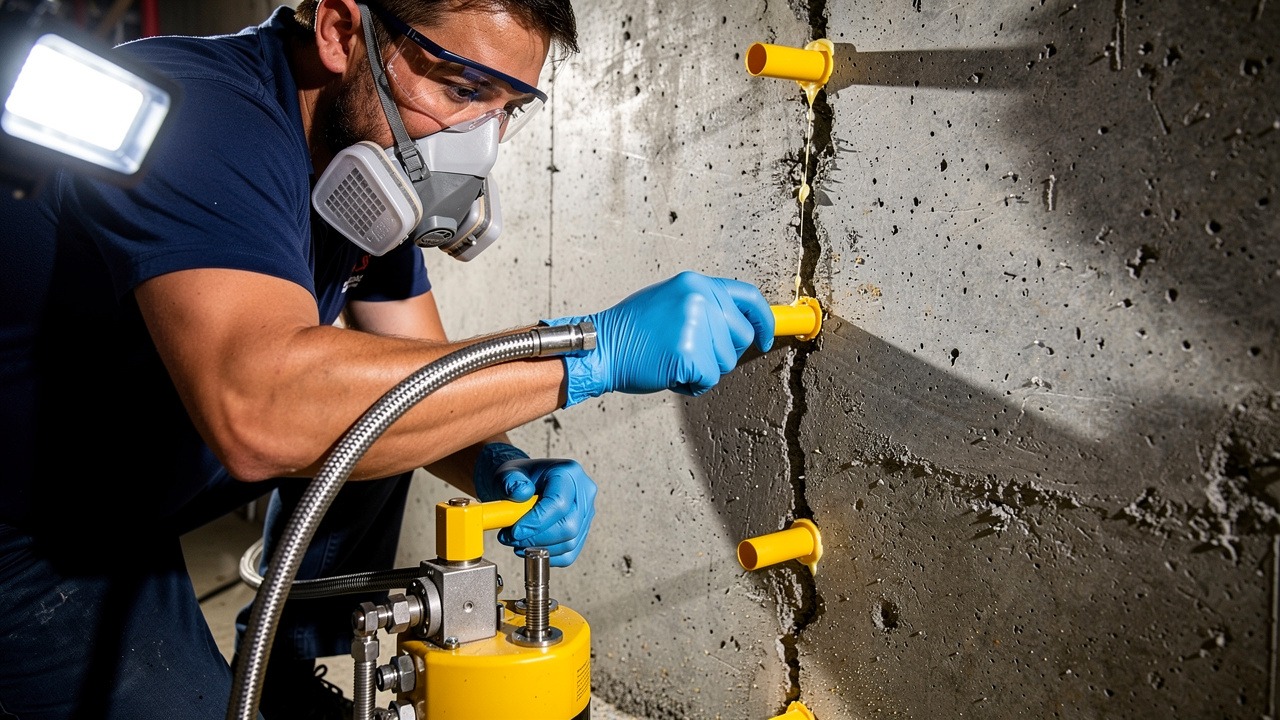
Polyurethane injection, commonly known as PU injection or grouting, is used for suitable seepage through concrete cracks, joints, pores and honeycombed concrete.
Allstar describes the method as pressure-injecting polyurethane material into the affected area. When the chemical contacts water, it reacts and expands, helping fill concrete pores and cracks through which moisture is travelling. Allstar states that the material it uses can expand substantially after injection.
PU injection can therefore be useful when a localised concrete defect forms part of the confirmed water pathway.
Its advantage is that the repair can target the defect within the concrete rather than simply coating the visible surface.
However, PU injection is not a universal waterproofing solution.
If an entire bathroom membrane has deteriorated, a roof flashing has failed or a plumbing pipe is leaking, injecting one concrete crack does not repair those defects.
When Is PU Injection Not the Right Repair?
PU injection is unlikely to solve a problem when the water is not actually travelling through a suitable concrete crack, joint or void.
A failed roof component needs roof repair.
A defective pipe requires plumbing work.
Extensive wet-area membrane failure may require the waterproofing system to be repaired or rebuilt.
Drainage problems, loose tiles, defective screed and deteriorated external sealants also require treatment directed at those components.
This is why asking for a “PU injection price” before the leakage source is confirmed can lead to an inaccurate comparison.
The first question should be whether PU injection is technically appropriate for the diagnosed defect.
What Is Flood Infusion or Crystallisation Treatment?
Allstar also provides Flood Infusion Treatment using crystallisation waterproofing technology.
The company describes the process as creating needle-like crystals within concrete pores and capillaries so water pathways become blocked.
This can provide a less invasive option in suitable concrete and inter-floor leakage situations.
It is also notable that HDB’s current ceiling-leak guidance recognises Flood Infusion among the repair approaches that contractors may consider, together with methods such as chemical grout or PU injection and nanotechnology waterproofing. HDB states that the appropriate method depends on the severity of the leak and the owners’ needs, and that some cases may require more than one method.
That does not mean Flood Infusion is suitable for every HDB ceiling leak.
The defect still needs to be assessed first.
When Are Waterproofing Coatings Used?
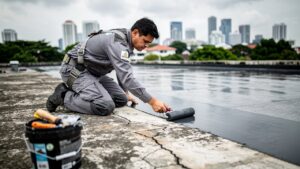
Waterproofing coatings can be suitable for prepared roof and external-wall surfaces where a protective barrier forms part of the repair system.
Allstar’s current service page describes patching and sealing cracks before applying a protective waterproof coating to existing roofs and external walls.
Surface preparation matters greatly.
Applying a new coating over loose material, contamination, unresolved cracks or unstable substrates can leave the original weakness underneath the new layer.
A coating should therefore be viewed as part of a repair system rather than paint that can simply be rolled over any damp area.
When Does Wet-Area Waterproofing Need to Be Rebuilt?
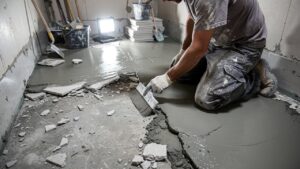
A bathroom, toilet, kitchen or balcony may require more extensive work when the waterproofing system beneath the visible finish has deteriorated significantly.
Signs that a more invasive scope may need consideration include widespread substrate deterioration, defective screed, loose finishes, drainage problems or failure affecting a larger portion of the wet area.
In these cases, removing and rebuilding affected layers may provide more reliable access to the actual defect.
The goal is not to hack whenever leakage appears.
It is to avoid choosing a less invasive method merely because it creates less disruption when the underlying problem requires more complete repair.
Can Water Leakage Be Repaired Without Hacking?
Yes, some leakage can be repaired without extensive hacking.
Allstar currently offers less invasive approaches including PU injection, Flood Infusion and other restorative waterproofing methods for suitable situations.
HDB likewise recognises chemical grout or PU injection, Flood Infusion and nanotechnology waterproofing among possible methods for appropriate ceiling-leak cases.
However, non-hacking does not automatically mean better.
If tiles are loose, screed has failed, drainage is defective, the waterproofing membrane is extensively damaged or the substrate requires repair, a more invasive approach may be necessary.
The useful question is therefore not:
“Can I avoid hacking?”
It is:
“Can this leak be repaired properly without hacking?”
Is Non-Hacking Waterproofing Permanent?
No repair method should be described as automatically permanent simply because it does not involve hacking.
A non-hacking solution can provide a durable repair when the defect has been identified correctly and the substrate is suitable for the treatment.
Its performance still depends on the type of defect, building movement, preparation, workmanship, moisture conditions and whether other weaknesses exist nearby.
A contractor should therefore explain why the non-hacking treatment suits the leak, not simply advertise the fact that tiles do not need to be removed.
How Do the Main Repair Methods Differ?
PU injection is generally associated with suitable concrete cracks, joints, voids or honeycombed areas.
Flood Infusion or crystallisation treatment may be considered in appropriate concrete or inter-floor seepage situations where a less invasive treatment is technically suitable.
Protective waterproof coatings can be used on prepared roof or external-wall surfaces.
Wet-area waterproofing work addresses failed waterproofing systems in bathrooms, toilets, balconies and similar areas.
Roof repair is necessary when the failure lies in roofing components or roof waterproofing rather than inside the room where the stain appears.
Plumbing repair is required when the actual source is a water or sanitary pipe.
The correct treatment is therefore determined by what failed, not by which waterproofing product sounds most advanced.
How Much Does Water Leakage Repair Cost in Singapore?
There is no reliable universal price for water leakage repair.
A local injection, small joint repair, bathroom waterproofing project, façade repair and full roof treatment can differ substantially in labour, access, materials and reinstatement.
Allstar’s published waterproofing-cost guide gives an indicative figure of approximately S$800 to S$1,500 for waterproofing an average bathroom of about four to six square metres.
That figure should not be interpreted as saying that all water leakage repair in Singapore costs S$800 to S$1,500.
It refers specifically to Allstar’s own published bathroom-waterproofing estimate.
A leakage project involving hacking, tile replacement, screed work, extensive substrate repair, plumbing interfaces or reinstatement can cost differently.
Roof and façade work can also be affected substantially by treatment area and access requirements.
For an actual leakage repair, a site-specific scope is more useful than a generic price range.
What Affects Water Leakage Repair Cost?
The source is one of the biggest cost factors.
A localised concrete defect requires a different treatment from an extensively failed wet-area system.
The size of the treatment area also matters, although the visible stain itself does not always indicate how large that area will be.
Access can influence cost significantly for roof and façade work.
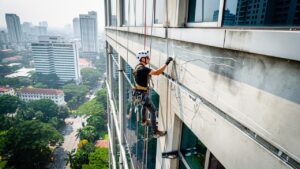
Specialised preparation, rope access, difficult working conditions, damaged concrete, hacking, reinstatement and curing requirements can also expand the scope.
Allstar’s own bathroom-waterproofing pricing guidance identifies factors such as size, treatment extent, materials, method, accessibility and necessary repair work as contributors to overall cost.
Why Can Two Water Leakage Quotations Be So Different?
Two contractors can look at the same damp ceiling and submit very different quotations because they may not be proposing the same repair.
One contractor may quote only for sealing a visible crack.
Another may believe the source is the wet area above and include a larger waterproofing scope.
Another may include hacking, preparation and reinstatement.
A roof or façade quotation may also include specialist access that another proposal excludes.
Before comparing the total price, compare the diagnosis and scope.
Ask what the contractor believes has failed.
Then compare the area being repaired, preparation, material system, hacking requirements, reinstatement, testing and warranty.
A cheaper quotation is not automatically poor value.
A more expensive quotation is not automatically more complete.
The meaningful comparison is whether the proposed work addresses the same confirmed defect.
What Should Be Included in a Water Leakage Repair Quotation?
A useful quotation should clearly identify the area to be repaired and the method that will be used.
It should explain any important preparation and whether hacking is required.
If finishes will be removed, the owner should understand what reinstatement is included.
For roof or façade projects, the quotation should make clear whether specialised access forms part of the price.
The expected project duration should also distinguish between active repair time and curing or waiting periods where relevant.
Warranty terms should identify the covered repair and applicable duration.
Allstar currently states that it provides transparent quotations and that its repair work is backed by a one-year warranty, with extended-warranty arrangements available for discussion.
The exact project terms should still be confirmed in writing before work begins.
What Questions Should You Ask Before Approving the Repair?
Before approving a quotation, ask the contractor to explain the suspected source in simple terms.
Then ask why the recommended method suits that source.
If another less invasive repair is possible, ask why it is or is not appropriate.
If hacking is required, ask which areas will be removed and what reinstatement is included.
For wet-area or roof work, ask when normal water exposure can resume.
Ask how the contractor intends to check that the repair has worked.
Finally, confirm the warranty scope.
These questions are useful because a technical-sounding product name does not by itself prove that the proposed method is the right solution.
Who Is Responsible for an HDB Ceiling Leak?
HDB describes ceiling leakage within flats as a shared maintenance issue and advises flat owners to engage a contractor together. Flat owners remain responsible for maintaining their flats, while leakage from common property should be reported to the Town Council.
HDB also states that contractors should recommend the repair method according to the severity and circumstances of the leak and notes that some cases may require multiple repair approaches.
Possible methods listed in HDB’s current guidance include chemical grout or PU injection, Flood Infusion and nanotechnology waterproofing, alongside other forms of repair.
This is useful because it confirms that there is no single mandatory repair method for every inter-floor ceiling leak.
For leaks involving sanitary pipes, HDB separately states that flat owners maintain sanitary branch pipes within their flats, while the Town Council maintains the main sanitary pipes.
Photographs, dates, inspection findings and written quotations can make discussions between neighbours easier because both sides can refer to the same information rather than assuming the source.
What About Water Leakage in a Condominium?
For condominium leakage, the first question is whether the source appears to be within an individual lot or involves common property.
If a common roof, façade, service area or other shared building component may be involved, inform the managing agent or MCST before arranging extensive work.
For suspected inter-unit leakage, keep written records of when the problem appears and photographs of the affected area.
Inspection findings and repair proposals are also useful where access to another unit may be needed.
A contractor should avoid making broad statements about legal responsibility unless the origin of the water has actually been established.
How Long Does Water Leakage Repair Take?
Repair duration depends on the method and scope.
A local injection or sealing job may take far less time than rebuilding a wet-area waterproofing system, completing extensive roof work or carrying out high-level façade repair.
Curing time can also affect when the area can return to normal use.
Allstar states that project duration varies according to project scale and complexity rather than following one universal timeline.
Before work begins, ask for a realistic sequence covering preparation, repair, curing, testing and reinstatement where applicable.
How Do You Know Whether Water Leakage Repair Worked?
A clean-looking ceiling immediately after repair does not necessarily prove that the source has been resolved.
Existing materials may remain damp for some time.
Repainting immediately can also make it harder to tell whether moisture is still entering.
Instead, judge the repair against the conditions that previously caused the leak.
If the ceiling became wet whenever it rained, observe it after subsequent rainfall once the repair has cured.
If the leak followed shower use, monitor the area after normal wet-area use resumes.
Watch for fresh staining, bubbling paint, dampness or water appearing at a nearby point.
The objective is not simply for the original stain to disappear.
It is for the original water pathway to stop producing moisture.
How Do You Choose a Reliable Water Leakage Contractor?
A reliable contractor should be willing to diagnose the problem before insisting on one particular treatment.
They should be able to explain the likely defect and connect the repair method directly to it.
Experience is relevant, especially for complicated roof, concrete, façade and wet-area problems, but clarity matters too.
Allstar currently states that it has more than 20 years of waterproofing experience and has served more than 3,000 residential, commercial and industrial properties. Its current leakage service page also displays BCA and bizSAFE3 credentials and promotes free comprehensive inspection and a one-year repair warranty.
Those are Allstar’s published company claims and credentials.
Property owners should still evaluate the actual diagnosis, scope and warranty proposed for their own repair.
One useful test is to ask:
What do you believe the defect is?
What makes you think that?
Why will this method repair it?
A contractor who can answer those questions clearly makes the quotation much easier to evaluate.
What Warranty Does Allstar Provide?
Allstar currently states that its repair work is backed by a one-year warranty, with the option to discuss extended warranty arrangements.
The actual covered work and exclusions should be confirmed in the final quotation.
Warranty duration should also be considered together with the repair method.
A long warranty cannot compensate for treating the wrong source.
Diagnosis remains the first step.
Why Is the Cheapest Water Leakage Repair Not Always the Lowest-Cost Choice?
A cheap repair becomes expensive when it has to be repeated because the original source was not addressed.
Repainting a ceiling does not repair a leaking bathroom above.
Sealing an internal wall does not solve rain entering through an external joint.
Injecting a concrete crack may not solve a plumbing leak or widespread membrane failure.
This does not mean the highest quotation is automatically better.
It means the quotation should make sense technically.
The best-value repair is the one whose scope clearly matches the diagnosed defect and includes the preparation and reinstatement needed to complete the work properly.
How Can You Reduce the Risk of Water Leakage Returning?
Routine inspection can help identify deterioration before it becomes a serious interior leak.
Roofs and drainage areas should be checked for blocked outlets, damaged joints, cracks, coating deterioration and other visible defects.
Allstar currently recommends inspecting roofs at least twice a year as a preventative measure.
Bathrooms, balconies and kitchens should also be monitored for persistent grout deterioration, failing sealant, loose finishes or water appearing outside expected wet areas.
External-wall cracks and ageing joints deserve attention when dampness repeatedly appears during rain.
After any repair, retain photographs, the quotation, invoice, repair scope and warranty.
If leakage appears again, those records help distinguish between recurrence of the same defect and a new water pathway.
Frequently Asked Questions About Water Leakage Repair in Singapore
How Much Does Water Leakage Repair Cost in Singapore?
There is no universal fixed price because repair cost depends on the defect, repair area, method, access, preparation and reinstatement. Allstar publishes approximately S$800–S$1,500 as an indicative waterproofing cost for an average four-to-six-square-metre bathroom, but this applies specifically to bathroom waterproofing and should not be treated as the price of every leakage repair.
Should I Call a Plumber or Waterproofing Contractor for a Ceiling Leak?
If the source is a pipe, sanitary fitting or plumbing system, a plumber may be required. If the leakage comes through a wet-area waterproofing system, roof, wall, concrete slab or building joint, waterproofing or building-repair expertise may be more relevant. If the source is unclear, have the leak investigated before choosing the repair trade.
Is Waterproofing the Same as Water Leakage Repair?
No. Leakage repair addresses an existing defect and water pathway. Waterproofing is one possible part of the repair when the failed component is a waterproofing system. Other leaks may require injection, roofing work, joint repair or plumbing instead.
Can Water Leakage Be Repaired Without Hacking?
Yes, some leakage can be repaired using less invasive approaches such as PU injection or selected non-hacking waterproofing methods. HDB also recognises PU injection, Flood Infusion and nanotechnology among possible methods for suitable ceiling-leak cases. The correct option still depends on the defect.
Is Non-Hacking Waterproofing Always Better?
No. A non-hacking method reduces disruption but is only useful if it repairs the actual water pathway. Extensive waterproofing, screed, drainage or substrate failure may require more invasive work.
When Is PU Injection Suitable?
PU injection may be suitable for certain leakage pathways involving concrete cracks, joints, voids or honeycombed concrete. It is not intended to replace repairs to failed roofing components, plumbing systems or extensively damaged waterproofing membranes.
Why Does My Water Stain Keep Returning After Painting?
The underlying moisture source is probably still active. Repainting changes the finish but does not stop water travelling through the structure. The entry point needs to be identified and repaired before cosmetic reinstatement provides a lasting result.
Why Are Two Waterproofing Quotations So Different?
They may not cover the same defect or scope. Compare what each contractor believes is causing the leak, the treatment area, repair method, preparation, hacking, reinstatement, access requirements and warranty before comparing price alone.
Who Is Responsible for an HDB Ceiling Leak?
HDB treats ceiling leakage within flats as a shared maintenance issue and advises affected flat owners to engage a contractor together. If the source comes from common property, the Town Council should be contacted.
Can HDB Ceiling Leakage Be Repaired With PU Injection?
HDB’s current guidance lists chemical grout or PU injection among possible ceiling-leak repair methods, alongside Flood Infusion and nanotechnology waterproofing. The contractor should recommend the method according to the actual leak and its severity.
How Long Does Water Leakage Repair Take?
The timeline depends on the method and extent of the work. A targeted repair may be relatively quick, while extensive wet-area, roof, concrete or façade work can require additional preparation, curing and reinstatement.
How Do I Know Whether the Leak Has Been Fixed?
Monitor the affected area under the conditions that previously caused the problem after the repair has cured. A rain-related leak should remain dry after subsequent rainfall, while a wet-area-related leak should not return after normal water use resumes. Old staining may take time to dry, so look for new moisture rather than appearance alone.
What Should a Water Leakage Quotation Include?
A useful quotation should identify the repair area, proposed method, preparation, hacking requirements where relevant, reinstatement, expected timeline and applicable warranty. For roof or façade work, specialised access should also be clear.
Does Allstar Waterproofing Provide a Warranty?
Allstar currently states that its repair work carries a one-year warranty and that extended-warranty options may be discussed. The exact coverage, repaired area and exclusions should be confirmed in the written quotation for the individual project.
Conclusion
Water leakage repair is not simply about covering a stain or sealing the easiest crack to reach.
The lasting solution starts by understanding where the water entered and how it travelled through the building.
A ceiling stain may come from a wet area above, a concrete joint, a roof or a concealed plumbing route.
A damp wall may involve rain penetration, failed sealant, concrete cracking or waterproofing deterioration.
Because the symptoms can look similar, the repair method should follow the diagnosis.
Allstar Waterproofing & Services provides leakage repair across ceilings, walls, wet areas, roofs and concrete for residential, commercial and industrial properties in Singapore. Its current repair methods include PU injection, Flood Infusion or crystallisation treatment, waterproof coatings, wet-area waterproofing, roof work and concrete-related repair, supported by an inspection before the final scope is proposed.
For property owners, a practical repair sequence is straightforward:
document the leakage pattern → investigate the source → confirm the defect → match the repair method to it → compare the full quotation → allow proper curing → monitor the area afterwards.
The best water leakage repair is therefore not necessarily the least invasive, the quickest or the cheapest.
It is the repair that stops the water pathway responsible for creating the damage and leaves the property owner understanding exactly what was repaired, why that method was chosen and what to look for afterwards.