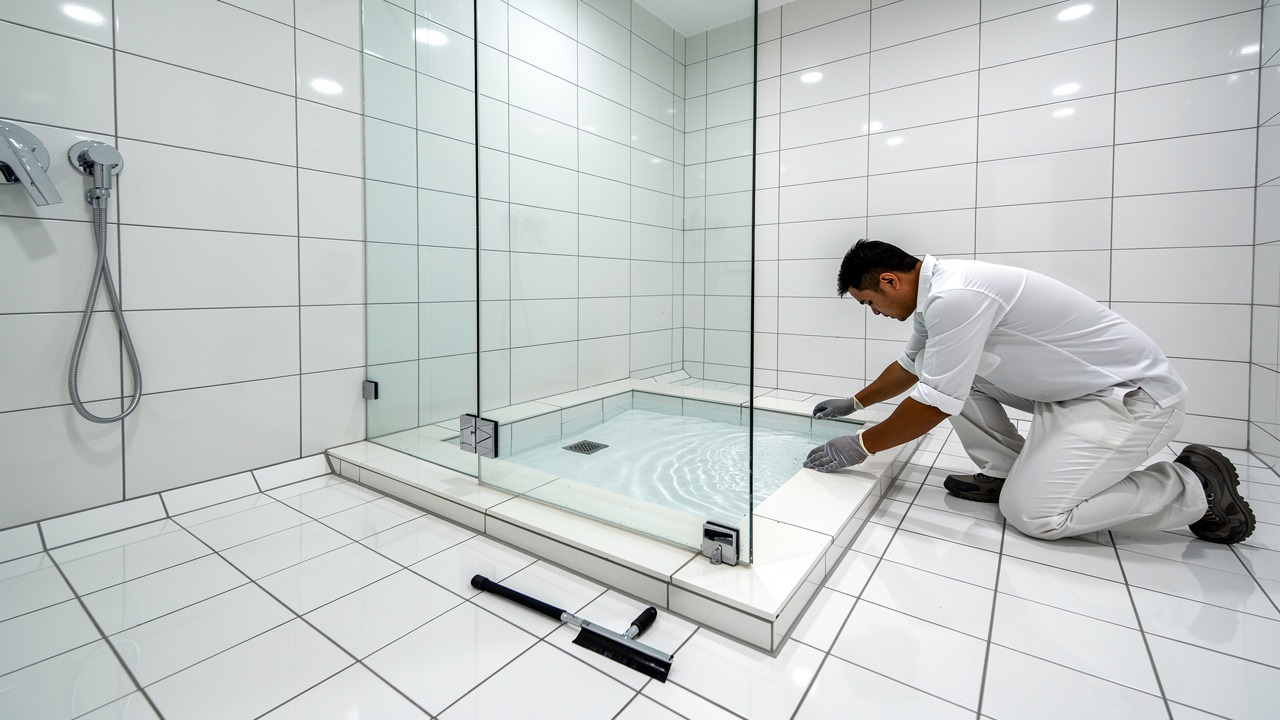
A ceiling stain that returns after heavy rain, a bathroom floor causing seepage below or a damp wall that refuses to dry usually means water is still entering the building somewhere.
Repainting may temporarily hide the damage, but it does not repair the pathway through which moisture is travelling.
Water can move through concrete slabs, screed, joints, roof surfaces, wet-area membranes, cracks and concealed spaces before becoming visible indoors. The location of the stain may therefore be different from the actual defect.
That is why choosing a waterproofing company in Singapore should begin with diagnosis rather than selecting a waterproofing product in advance.
Allstar Waterproofing & Services currently provides wet-area waterproofing, roof waterproofing, water-seepage and leakage repair, concrete-related repairs and other specialist waterproofing services for residential, commercial and industrial properties. Allstar states that it begins with an inspection before proposing a repair scope and reports more than 20 years of industry experience and more than 3,000 properties served.
For property owners, the most important question is therefore not:
“Which waterproofing product should I use?”
It is:
“What has failed, where is the water coming from and which repair method addresses that defect?”
Quick Answer: How Do You Choose a Waterproofing Company in Singapore?
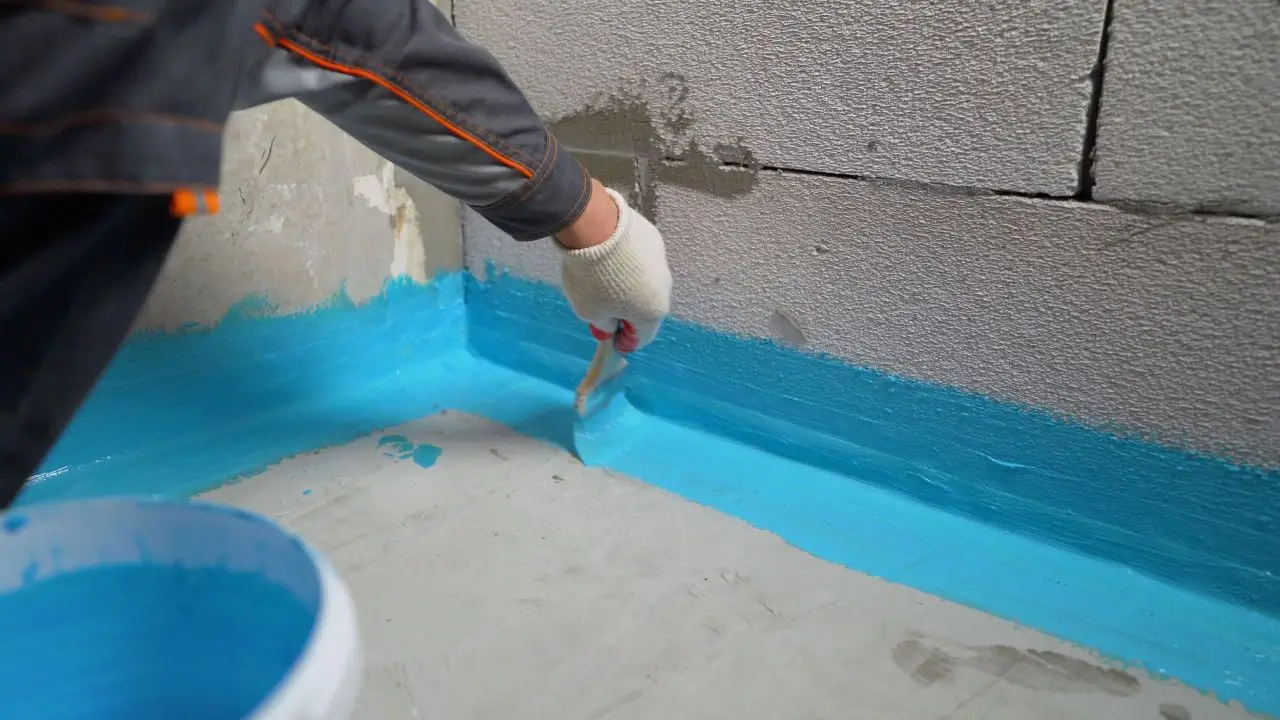
Choose a waterproofing company that inspects the property before recommending treatment, identifies the likely source of water ingress and explains why the proposed repair method is suitable.
A useful written quotation should clearly state the treatment area, preparation, waterproofing or repair method, hacking where applicable, reinstatement, access requirements, estimated timeline and warranty.
Do not compare contractors only by price or by the length of the warranty.
First compare what each company believes has failed and whether the proposed repair actually addresses that defect.
A contractor promising a particular method, especially “no hacking,” before inspecting the property may be making the treatment decision too early.
What Does a Waterproofing Company in Singapore Actually Do?
A waterproofing company investigates water ingress and recommends repair or protective work based on the building element that has failed.
The problem may involve a bathroom, toilet, balcony, roof, façade, concrete slab, ceiling or adjoining building component.
This means waterproofing work should go beyond applying sealant to whichever crack is easiest to see.
A ceiling stain may originate from a failed wet-area membrane, concrete crack, roof defect or plumbing problem. A damp wall may be affected by external seepage or an internal water source.
The correct repair depends on identifying the water pathway first.
A waterproofing company therefore needs to connect three things:
the visible symptom → the likely defect → the appropriate treatment.
Do You Need a Waterproofing Company, Plumber or Roofer?
The correct contractor depends on what has failed.
A plumber is generally more appropriate when water is escaping from a pipe, sanitary fitting, plumbing fixture or another part of the plumbing system.
A roofer may be required when the problem involves roof components such as broken tiles, metal roof sheets, flashing, capping, ridges or gutters.
A waterproofing company is more relevant when water is penetrating through failed membranes, wet areas, concrete cracks, joints, balconies, roofs or other parts of the building envelope.
Some problems overlap.
For example, a ceiling below a bathroom could be affected by either plumbing or waterproofing.
If the source is unclear, investigate before choosing the repair trade. Allstar’s current leakage guidance similarly distinguishes plumbing failures from wet-area, roof, concrete and waterproofing-related leakage.
Why Are Water Leaks Common in Singapore Properties?
Singapore buildings are exposed to frequent rainfall, high humidity and strong solar heating.
External building surfaces repeatedly heat and cool, while wet areas such as bathrooms and balconies are exposed to water every day.
Waterproofing membranes, joints, screed, sealants and roof details also deteriorate over time.
For HDB flats, inter-floor ceiling leakage is a recognised maintenance issue. HDB states that these leaks commonly occur when water from the upper flat passes through the floor slab after deterioration of the waterproof membrane and screed.
Landed properties and commercial buildings may face additional exposure through roofs, façades, balconies and drainage systems.
The term “water leakage” therefore describes the symptom rather than identifying one universal repair.
How Does a Waterproofing Company Find the Source of a Leak?
Diagnosis should begin with the history of the problem.
The contractor should establish when the moisture appears.
Does it happen only during heavy rain?
Does it become worse after someone uses the shower?
Is the stain constantly damp regardless of weather?
Has the same area been repaired previously?
The affected area and adjoining spaces should then be assessed.
For a ceiling leak, the investigation may need to include the bathroom, room or roof above.
For a damp wall, possible external surfaces, joints, wet areas or plumbing may need to be considered.
Visible cracks, drainage conditions, roof details and deterioration can provide further clues.
The important point is that the wettest-looking area is not automatically the location that requires repair.
What Waterproofing Services Does Allstar Provide?
Allstar currently provides several types of waterproofing and leakage repair because different defects require different treatment methods.
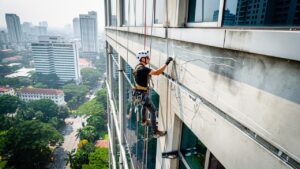
Its current service offering includes wet-area waterproofing, roof waterproofing, water-seepage and leakage repair, concrete-related repairs and specialist-access work for difficult exterior locations.
It also publishes PU injection and Flood Infusion treatment among its approaches for suitable leakage conditions.
The practical advantage of having multiple methods available is that the repair can follow the diagnosis rather than forcing every leak into the same treatment.
How Does Wet-Area Waterproofing Work?
Wet-area waterproofing protects bathrooms, toilets, balconies and other areas exposed regularly to water.
If the waterproofing membrane or surrounding substrate deteriorates, moisture can move through screed or concrete and appear below.
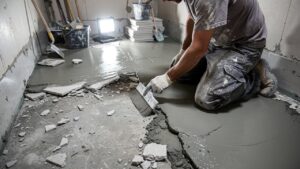
Where deterioration is extensive, the existing finishes and screed may need to be opened so the failed waterproofing can be properly replaced.
HDB’s recommended re-screeding method for certain inter-floor toilet leaks involves removing the floor finishes and screed, preparing the substrate, applying waterproof membrane and reinstating the floor.
Alternative approaches may be appropriate in other situations.
The method should therefore depend on the actual condition beneath the visible surface.
What Is PU Injection Waterproofing?
Polyurethane injection, often called PU injection or grouting, is used for suitable leakage involving concrete cracks, joints or honeycombed concrete.
Allstar describes the process as injecting polyurethane material into the affected area. When it comes into contact with water, the material reacts and expands, helping to seal pores and cracks through which moisture is travelling.
This can make PU injection useful for selected localised concrete leakage problems.
However, it does not repair every source of water ingress.
A leaking pipe still needs plumbing repair.
Damaged roof flashing needs roof repair.
Widespread bathroom membrane failure may require a broader wet-area treatment.
The useful question is therefore:
“Which water pathway is the PU injection intended to seal?”
What Is Flood Infusion Waterproofing?
Flood Infusion is a crystallisation-based treatment Allstar currently uses for suitable concrete and wet-area leakage conditions.
Allstar describes the system as using crystalline compounds that develop within concrete pores and capillaries, helping block water penetration pathways.
The main appeal is reduced disruption in situations where the method is appropriate.
However, Flood Infusion cannot repair every defect.
It does not replace broken roof components, plumbing repairs or removal of badly deteriorated screed simply because the owner wishes to avoid hacking.
Treatment suitability still depends on the substrate and source of leakage.
Can Waterproofing Be Done Without Hacking?
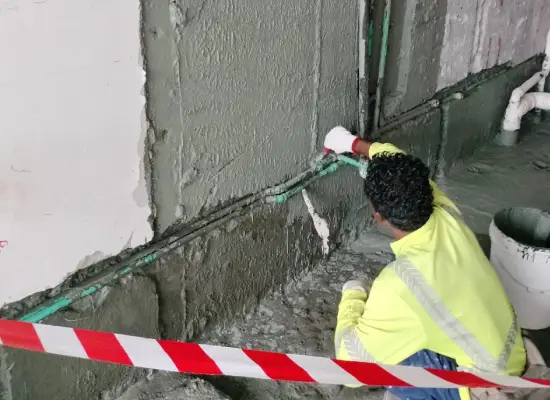
Yes, some leakage problems can be repaired without major hacking.
Methods such as PU injection, Flood Infusion and certain overlay systems can reduce demolition and reinstatement when the existing substrate remains suitable.
HDB itself lists several alternative inter-floor leakage repair methods in addition to conventional re-screeding, including chemical grout or PU injection, Flood Infusion and overlay waterproofing systems.
However, no-hacking waterproofing is not automatically better.
Loose tiles, damaged screed, extensive membrane failure, poor drainage falls or deteriorated substrates may still need to be exposed and repaired.
Allstar’s own current specialist guidance makes the same distinction: the meaningful question is whether the confirmed defect can be repaired properly without hacking.
What Roof Waterproofing Services Does Allstar Offer?
Roof leakage requires a roof-specific diagnosis because different roof systems fail in different ways.
Flat concrete roofs can develop cracking, failed joints, deteriorated membranes and drainage-related ponding.
Metal roofs can develop problems around flashing, fasteners, joints and capping.
Tiled roofs can have damaged tiles, ridges, valleys and adjoining details.
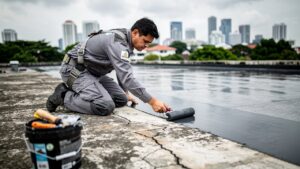
Allstar currently offers roof waterproofing and repair using methods including liquid-applied and torch-applied waterproofing systems, together with targeted roof repair where local defects are responsible.
A stain below a roof therefore does not automatically mean the whole roof needs to be resurfaced.
The repair scope should reflect whether the problem is isolated or widespread.
When Does Water Leakage Require Concrete Repair?
Not every water stain indicates damaged concrete.
However, significant cracking, honeycombing, exposed reinforcement or spalling may require concrete repair in addition to waterproofing.
Waterproofing addresses the pathway through which moisture is penetrating.
Concrete repair addresses deterioration of the concrete itself.
Allstar currently provides concrete repair alongside waterproofing services and reports the same inspection-first process for concrete-related issues.
If sections of concrete are cracking or falling away, the issue should therefore not be treated purely as a cosmetic stain.
What Happens During Allstar’s Waterproofing Process?
Allstar currently describes a process beginning with consultation and on-site inspection.
The team assesses visible and underlying conditions before discussing a tailored repair approach.
Straightforward cases may receive an on-the-spot quotation. More complex proposals may require approximately one to three working days to prepare.
Once the quotation is accepted and scheduling is arranged, the work proceeds according to the project’s scale and complexity.
This matters because a local PU injection repair, complete wet-area replacement and major roof project should not be expected to follow the same timeline.
How Should You Compare Waterproofing Companies in Singapore?
Begin with the diagnosis.
Ask each contractor:
What do you believe has failed?
Then ask:
What evidence makes you think that?
Finally:
Why is this repair method appropriate for that defect?
Once the diagnosis is clear, compare the scope.
Look at preparation, hacking, reinstatement, materials, access, verification and warranty.
Relevant experience and safety credentials are useful additional checks.
However, the lowest quotation, longest warranty or most advanced-sounding waterproofing product should not automatically decide the job.
Allstar’s current contractor guidance similarly recommends comparing diagnosis, repair-method fit, scope clarity, technical capability, price transparency, warranty and follow-up.
What Should a Waterproofing Quotation Include?
A useful waterproofing quotation should clearly identify the proposed treatment area and repair method.
Important preparation should be included.
If hacking is required, the scope should explain what needs to be opened.
If tiles, screed or finishes need reinstatement, owners should check whether those items are included.
For external walls or roofs, access requirements may affect the scope and price.
The quotation should also state the expected project timeline and applicable warranty.
Allstar’s current specialist guide specifically recommends comparing treatment area, method, preparation, hacking, reinstatement, access and warranty rather than comparing price alone.
Why Can Waterproofing Quotations Be Very Different?
Different contractors may have diagnosed different problems.
One contractor may believe a localised crack can be treated through PU injection.
Another may believe the underlying wet-area waterproofing has deteriorated more extensively.
One quotation may include hacking and tile reinstatement.
Another may exclude them.
Access methods can differ for roofs and façades.
Even two proposals using the same broad term such as “waterproofing” may therefore contain very different amounts of work.
Price comparison becomes meaningful only after the scopes are reasonably comparable.
How Long Does Waterproofing Repair Take?
There is no universal timeframe for waterproofing repair.
Duration depends on the diagnosis, area size, preparation, repair method, hacking, curing, access and reinstatement.
External work can also be affected by weather.
A local injection repair has a fundamentally different timeline from removing and rebuilding an entire wet-area waterproofing system.
Allstar’s current process states that larger repair projects may range from weeks to months depending on project scale and complexity.
Owners should therefore ask for a project-specific schedule rather than accepting the same duration for every type of repair.
The contractor should also distinguish between the time required to perform the work and any curing period required before normal use resumes.
Should Every Waterproofing Job Include a Ponding Test?
No.
Verification should match the repair.
A water or ponding test can be useful for suitable wet-area waterproofing because the objective is to check whether water continues passing through the repaired floor system.
However, the same test does not automatically make sense for every service.
A repaired roof flashing, injected concrete crack and external-wall repair involve different conditions.
The better question is:
“How will you verify that this particular repair has worked?”
How Do You Know Whether Waterproofing Has Worked?
The repaired area should be monitored after the treatment has been completed and any required curing period has passed.
Verification should reproduce, as far as practical, the conditions that previously caused the leakage.
If the original leak appeared during rainfall, the affected interior area should remain dry after subsequent rain.
If the problem involved a wet area, normal water use should not cause the previous seepage to return once the contractor says the area is ready for use.
For other repairs, the verification method should match the defect and treatment.
Allstar’s current specialist guidance similarly recommends monitoring repaired areas under the conditions that previously triggered the leakage.
Can Water Leakage Return After Waterproofing?
Yes.
A correctly repaired defect can remain resolved while another water pathway develops later.
Buildings continue to move and age.
New cracks can appear.
Drainage can become blocked.
Another part of an older membrane can deteriorate.
A separate plumbing problem can also produce moisture near an earlier repair.
A returning stain should therefore be investigated rather than automatically assumed to mean the original waterproofing failed.
The important question is whether the moisture is coming through the same repaired area or from a new source.
What Should You Do If a Leak Returns?
Document the problem before repainting or covering it.
Take photographs and note when the moisture appears.
For rain-related leakage, record whether it appears during light rain or only after prolonged rainfall.
For wet-area leakage, note when the affected bathroom or area was being used.
Then review the original quotation and written warranty and contact the contractor.
This information can help determine whether the returning leak is related to the previously repaired area.
How Can You Reduce the Risk of Leakage Returning?
Keep roof gutters and drainage points clear so water does not remain unnecessarily around vulnerable areas.
Investigate new cracks rather than allowing them to worsen.
Avoid damaging waterproof membranes during later renovation, electrical, air-conditioning or rooftop work.
Pay attention to deteriorated sealants and building joints.
Keep photographs, quotations, invoices, repair scopes and warranty documentation.
These records can make later diagnosis and warranty follow-up significantly easier.
How Much Does Waterproofing Cost in Singapore?
There is no universal waterproofing price because different defects require fundamentally different work.
A bathroom waterproofing replacement, PU injection, roof membrane and façade repair should not be priced as though they are the same service.
Allstar currently publishes approximately S$800 to S$1,500 as a planning reference for waterproofing an average bathroom of around 4–6 m². This is an Allstar-published bathroom reference rather than a universal Singapore market price or a quotation for every bathroom leakage case.
Work involving hacking, screed replacement, tile reinstatement, drainage correction or extensive substrate repair can have a substantially different scope.
Allstar separately publishes approximately S$5 to S$20 per square metre as an indicative reference for certain roof-waterproofing applications. That figure is roof-specific and should not be applied to bathrooms, façades, PU injection or waterproofing generally.
For most property owners, a site-specific quotation is therefore more useful than applying one online rate to every leak.
Does Allstar Waterproofing Provide a Warranty?
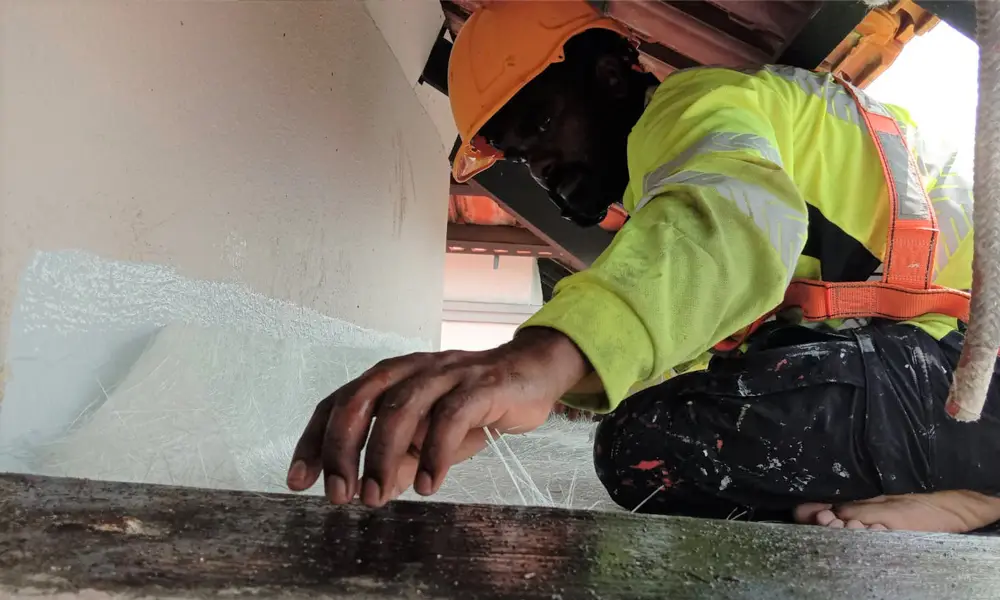
Yes.
Allstar’s current service pages state that its repair work is backed by a one-year warranty, with extended warranty options available for discussion depending on the project.
Owners should confirm the precise coverage in writing.
The warranty should identify what repair area is covered, how long the coverage applies and how recurring leakage will be assessed.
A longer warranty alone should not be treated as proof that one repair method is technically better.
The diagnosis still comes first.
What Credentials Should You Check When Choosing a Waterproofing Company?
Credentials provide useful supporting information, particularly for construction, roof, façade and commercial work.
Allstar’s current service pages display BCA and bizSAFE3 credentials and state more than 20 years of industry experience and over 3,000 residential, commercial and industrial properties served. These are Allstar’s published company claims and credentials.
Property owners should still evaluate the individual proposal.
Credentials support the contractor’s background.
They do not automatically prove that one particular waterproofing method is correct for your leak.
Who Is Responsible for Ceiling Leaks Between HDB Flats?
For HDB inter-floor ceiling leakage, the first step is establishing the source.
HDB states that when repair to the floor and ceiling slabs between an upper and lower flat is required to resolve leakage, the two flat owners generally arrange the repair and split the costs involved.
HDB advises the lower-floor owner to approach the upper neighbour so the cause can be investigated and a contractor engaged where necessary.
The situation changes when the leakage comes from common property.
For example, the block roof above a top-floor flat is common property maintained by the Town Council. Roof leakage affecting the topmost flat should therefore be reported to the Town Council.
Source identification determines both the appropriate repair and who needs to be involved.
Who Handles Waterproofing Leaks in a Condo?
For strata-titled developments, responsibility depends on where the defect is located.
BCA’s current Strata Management Guide states that inter-floor seepage is generally presumed to originate from the unit immediately above unless evidence shows otherwise. The upper and lower subsidiary proprietors should jointly investigate the cause and determine their respective shares of repair costs.
Different rules can apply when the defect forms part of common property.
For example, BCA states that if a roof is common property, the management corporation is responsible for managing and maintaining it. A pipe serving multiple units may also form part of common property, while a pipe serving only one unit may fall under that unit owner’s responsibility.
Condo owners should therefore establish the source and check the strata boundary or consult the MCST rather than assuming every leak is either automatically the owner’s or the MCST’s responsibility.
Why Consider Allstar Waterproofing & Services?
Allstar’s main practical distinction is that it provides several waterproofing and leakage-repair approaches rather than relying on one standard treatment.
Its current offering includes wet-area waterproofing, roof waterproofing, leakage repair, PU injection, Flood Infusion and concrete-related services.
The company currently promotes free comprehensive inspections, transparent quotations and a one-year repair warranty, and reports more than 20 years of industry experience and more than 3,000 properties served. These remain company-published claims.
The useful value for owners is not simply having access to more waterproofing products.
It is having multiple possible repair methods available after the defect has been investigated.
Frequently Asked Questions About Waterproofing Companies in Singapore
How Do I Choose a Waterproofing Company in Singapore?
Choose a company that inspects before recommending treatment, identifies the likely source, explains why the repair method matches that defect and provides a written scope covering preparation, hacking or reinstatement where applicable, timeline, price and warranty.
Do I Need a Waterproofing Company or a Plumber?
A plumber is generally required for leaking pipes, fittings and plumbing systems. Waterproofing expertise is more relevant for membranes, wet-area seepage, roofs, concrete cracks and building-envelope water ingress. If the source is unclear, have the leak investigated first.
Can Waterproofing Be Done Without Hacking?
Sometimes. PU injection, Flood Infusion and other less-invasive approaches may suit certain defects, but extensive membrane, screed or substrate deterioration can still require hacking and reinstatement.
How Much Does Waterproofing Cost in Singapore?
There is no universal price. Allstar currently publishes approximately S$800–S$1,500 as a bathroom-waterproofing planning reference for an average 4–6 m² bathroom, while its S$5–S$20/m² figure applies specifically to certain roof-waterproofing work. Neither should be treated as a universal Singapore waterproofing rate.
How Long Does Waterproofing Repair Take?
Duration depends on the repair method, treatment area, preparation, hacking, curing, reinstatement, access and weather. Localised injection work and complete bathroom or roof waterproofing projects should not be expected to follow the same timeline.
What Should a Waterproofing Quotation Include?
A useful quotation should identify the treatment area, repair method, preparation, hacking where applicable, reinstatement, specialised access requirements, expected timeline and warranty. The suspected source should also be explained clearly enough for the owner to understand why the repair has been recommended.
How Do I Know Whether the Waterproofing Repair Worked?
Once the repair has cured, monitor the affected area under the conditions that previously caused the leak. Rain-related leakage should remain dry after later rainfall, while suitable wet-area repairs should not produce the previous seepage after normal use resumes.
Can Leakage Return After Waterproofing?
Yes. The repaired defect may remain resolved while new cracks, membrane deterioration, drainage issues or plumbing failures create another water pathway. Returning leakage should therefore be investigated rather than automatically assumed to be the same problem.
Who Pays for Ceiling Leakage Between HDB Flats?
For applicable inter-floor slab leakage, HDB states that the upper and lower flat owners generally arrange the repair and split the costs. If the leak comes from common property, such as the roof above a top-floor flat, the Town Council is responsible for rectification.
Does Allstar Provide a Warranty?
Yes. Allstar currently states that its repair work is backed by a one-year warranty, with extended warranty options available for discussion depending on the project. Owners should confirm the exact coverage in writing.
Final Thoughts: How Should You Choose a Waterproofing Company in Singapore?
Choosing a waterproofing company should begin with the source of the leak rather than the easiest-sounding repair.
A ceiling stain may come from a bathroom membrane.
It may come from a pipe.
A top-floor stain may originate from the roof.
A concrete crack may need injection or concrete repair.
A wet area with extensive membrane and screed deterioration may require a more substantial waterproofing replacement.
Those problems may look similar from inside the property, but they should not all receive the same treatment.
A strong waterproofing proposal should therefore answer three questions:
What has failed?
Why does the contractor believe that is the source?
How does the proposed work repair that specific defect?
Only after those questions are clear should you compare price, disruption, project duration and warranty.
For HDB and condo owners, identifying the source can also determine who needs to arrange or pay for the repair.
Allstar Waterproofing & Services currently provides several waterproofing and leakage-repair approaches, with its published process beginning with inspection before a tailored repair scope is proposed.
For homeowners, landlords, managing agents and commercial property owners, the most useful contractor is therefore not necessarily the company offering the quickest patch or lowest number over the phone.
It is the company that can explain the water pathway, match the repair method to the defect and clearly state what happens before, during and after the work.
Fix the source rather than simply covering the stain, and the repair has a much stronger foundation for keeping the property dry.